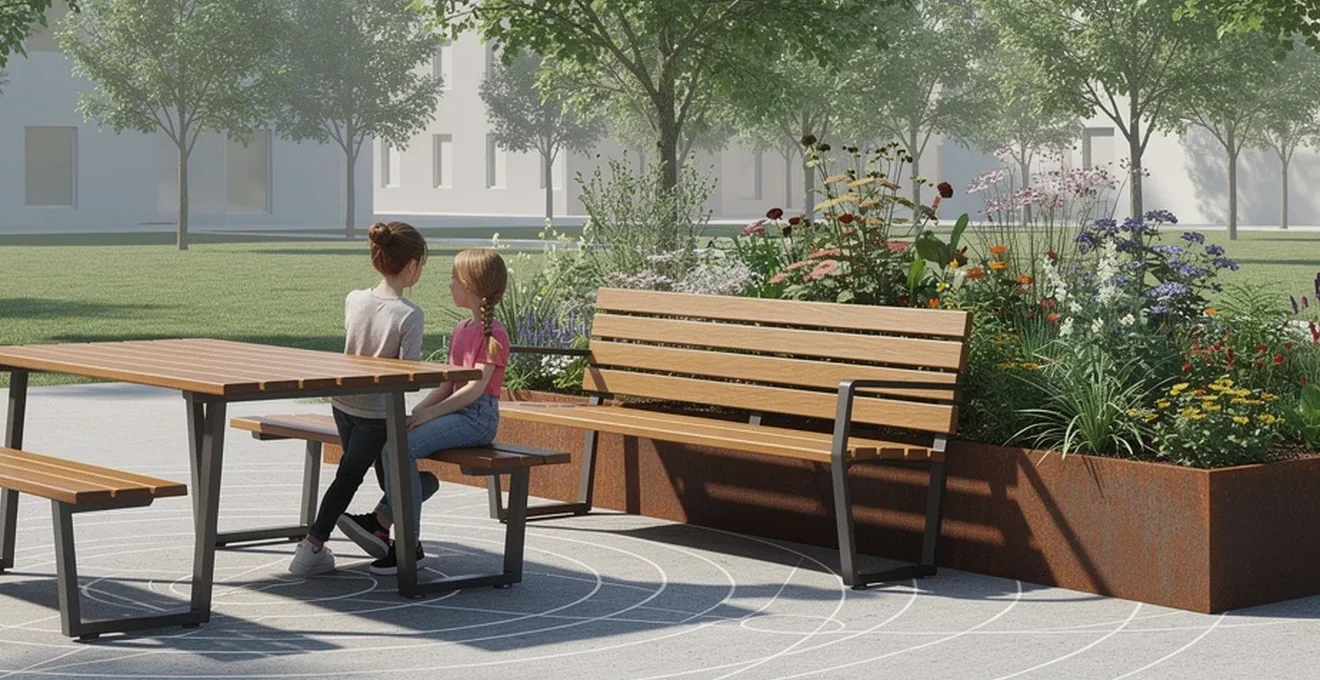
Well-designed public and community green spaces don’t happen by accident. They rely on careful site analysis, sensible material choices and furniture that suits the people who will actually use it. Benches, planters and picnic tables are often treated as an afterthought once the hard landscaping is complete, but they deserve the same level of planning as paths, planting beds and lighting. Get them right, and a park, high street or school grounds becomes a place where people linger, chat and return to. Get them wrong, and even the most attractive planting scheme will feel underused. This guide walks through the key stages of planning street furniture for green spaces: from initial site assessment through to material selection, accessibility, layout coordination and the ongoing maintenance that keeps everything safe and looking good for years to come.
Site analysis and spatial planning principles for urban green infrastructure
Before any bench or planter is specified, it’s worth understanding how a site actually functions: who moves through it, where they pause, and what they can see. This groundwork shapes every subsequent decision about furniture type, positioning and material.
Conducting a desktop survey and topographical assessment
A desktop survey pulls together existing information about a site before anyone sets foot on it: aerial imagery, historic mapping, drainage records and any topographical data already held by the local authority or landowner. This helps identify slopes, existing trees, underground services and any constraints that might affect where furniture can be safely installed. A site with mature trees, for example, might already have natural focal points worth designing around rather than against, echoing how established trees on a high street can shape where seating is best placed to make use of shade and shelter.
Applying desire line mapping to determine footfall patterns
Desire lines are the informal paths people create simply by walking where it’s most convenient, rather than where a path has been laid. Mapping these patterns, whether through observation or simply asking what a community already values about a space, helps designers understand where seating will actually get used. A bench tucked away from the main flow of foot traffic may look tidy on a plan but sit empty in reality, while one placed where people naturally pause becomes a genuine gathering point.
Zoning active and passive recreation areas
Not every part of a green space serves the same purpose. Areas for children’s play, sport or group gatherings need to be separated, at least loosely, from quieter zones intended for rest, conversation or contemplation. This zoning affects furniture choice directly: a picnic table suite works well near active zones where groups gather to eat after activity, while a single bench with a backrest suits a quieter corner intended for one or two people to sit and take a moment.
Calculating sightlines and CPTED (crime prevention through environmental design) requirements
Good sightlines matter for comfort as much as safety. Seating positioned where users can see who’s approaching, and be seen themselves, tends to feel more secure and get used more readily. CPTED principles encourage designers to avoid blind corners, dense planting immediately behind benches, or furniture placement that creates isolated, overlooked pockets within a wider space. This doesn’t mean every seat needs to face a busy path; quieter, more secluded spots still have value, but they should be considered deliberately rather than left to chance.
Selecting bench typologies for durability and ergonomic comfort
Once the layout is understood, the next question is what the benches themselves should be made from and how they should be built. This is where durability, comfort and long-term running costs all come into play.
Comparing FSC-Certified hardwood timber and recycled plastic lumber (RPL) benches
Timber remains a popular choice for its natural warmth and the way its golden tones can elevate a setting. Hardwoods such as teak offer a longer life and less maintenance than softwoods like pine, which typically require regular chemical treatment and last only around five to eight years before decay sets in. Reclaimed timber, sourced from old buildings, houses or piers, can also be repurposed into seating with little more than a coat of varnish, since it was often originally chosen for its weather resistance long before the material could be shipped internationally.
Recycled plastic lumber offers a different proposition entirely. Made from waste material, it resists weather, insects and rot for decades, needs minimal upkeep, and is available in a range of styles. Where timber may need attention every few months, a recycled plastic bench typically only needs a wipe down, making it a genuinely low-maintenance, eco-conscious alternative.
Cast iron versus galvanised steel frame construction
Metal frames bring sturdiness and a sleek, lasting lustre that suits more contemporary schemes. Cast iron has long been associated with classic park bench designs, while galvanised steel offers strong weather resistance and is often combined with timber or recycled plastic seating slats to balance durability with comfort. Metal does require regular cleaning and touch-ups to prevent rust, though low-emission protective coatings can significantly extend its lifespan compared with leaving it unprotected. Combining recycled steel with recycled plastic components also supports a more circular approach to material use.
Ergonomic seat height, depth and backrest angle specifications
Comfort isn’t a luxury detail; it determines whether a bench genuinely serves its purpose. A backrest gives users something to lean against during a longer rest, while a well-proportioned seat depth and height make it easier to sit down and, crucially, to get back up again. This matters enormously for elderly users, people with chronic illness, and disabled users, for whom a well-placed armrest can be the difference between managing independently and needing assistance. As a general principle, it takes very little extra effort or cost to add a backrest or armrest at the specification stage, yet it can mean everything to the person relying on it.
Vandal-resistant fixings and Anti-Skateboarding deterrent features
In public settings, fixings need to withstand more than weather. Tamper-resistant bolts, secure ground anchoring and robust joint construction all help benches stand up to misuse over time. Where skateboarding damage is a concern, discreet deterrent features can be built into armrests or bench edges without compromising the overall design or making the furniture feel unwelcoming to its intended users.
Integrating planters for biodiversity net gain and microclimate regulation
Planters do far more than decorate a scheme. Positioned thoughtfully, they support biodiversity, manage rainwater and soften the hard edges of paved public realm.
Choosing corten steel versus GRC (glass reinforced concrete) planter materials
Corten steel develops a distinctive weathered, rust-coloured patina over time, offering a robust, low-maintenance option that suits contemporary and industrial-style schemes. Glass reinforced concrete, by contrast, offers a lighter-weight alternative to traditional concrete with strong durability and design flexibility, making it well suited to sites where structural loading is a consideration or where a smoother, more refined finish is preferred.
Substrate composition for SuDS-Compliant rain gardens
Sustainable drainage systems rely on planters and rain gardens with the right substrate layering to manage stormwater effectively, allowing water to filter through rather than overwhelming existing drainage infrastructure. A well-designed substrate supports healthy plant growth while also performing this practical water management function, making planters a genuinely multi-purpose element of the wider landscape scheme rather than purely ornamental.
Selecting Pollinator-Friendly planting schemes with RHS plants for bugs
Choosing planting schemes that support pollinators contributes directly to biodiversity net gain within a scheme. Selecting a mix of flowering plants that provide nectar and habitat across different seasons helps sustain bees, butterflies and other insects, reinforcing the restorative, community-building value of green space that thoughtful seating and planting together can create.
Specifying picnic tables for accessibility and group capacity
Picnic tables encourage people to linger, eat and socialise in outdoor spaces, whether in parks, schools or workplaces. Specifying them well means thinking carefully about who will use them and how.
Dda-compliant Wheelchair-Accessible table configurations
Accessible picnic table designs incorporate extended overhangs or gaps in the bench line to allow wheelchair users to sit comfortably at the table alongside other users, rather than being positioned separately at the end. Including at least one accessible configuration within any picnic table cluster ensures nobody is excluded from the shared social experience the furniture is meant to create.
Octagonal versus rectangular table layouts for space efficiency
Octagonal picnic tables allow seating from multiple angles and can suit more open, informal gathering spaces, while rectangular layouts, particularly bench-and-table combinations such as traditional oak or pine picnic suites, tend to be more space-efficient in tighter areas and better suited to lining up along paths or within defined seating nodes. The choice often comes down to available space and how many people are expected to gather at once, from a couple sharing a snack on a walk to a group at a school or workplace break area.
Weatherproofing timber tables with Marine-Grade varnish and UV stabilisers
Timber picnic tables exposed to sun, rain and frost need appropriate weatherproofing to extend their working life. Marine-grade varnish and UV-stabilising treatments help protect timber surfaces from splitting, fading and moisture damage, reducing the frequency of costly refinishing. Hardier timbers such as iroko are often chosen for high-traffic settings like outdoor cafés and restaurants precisely because they combine natural durability with a strong response to this kind of protective treatment.
Street furniture layout and material coordination across the landscape scheme
Individual pieces of furniture matter, but so does how they work together across a whole site. Consistency and thoughtful positioning tie a scheme together visually and functionally.
Establishing a consistent material palette using woodscape or broxap product ranges
Drawing furniture from a coordinated product range, rather than mixing unrelated styles piecemeal, helps a scheme read as a considered whole. A consistent material palette across benches, planters and picnic tables, whether steel and timber combinations or recycled plastic ranges, reinforces a sense of place and makes maintenance simpler, since replacement parts and finishes are more likely to match existing furniture.
Positioning furniture clusters relative to shade trees and sun orientation
Existing trees offer more than visual interest; they provide shade that affects how comfortable seating is throughout the day. Grouping benches and picnic tables near mature trees, where locals already value the shade and the wildlife they attract, makes practical sense as well as respecting what a community already treasures about a space. Sun orientation should also inform furniture placement for areas intended for outdoor working or extended dining, where glare and overheating can otherwise discourage use.
Circulation widths and pedestrian flow around seating nodes
Seating clusters need enough surrounding space for chairs to be pulled out, wheelchairs to manoeuvre, and pedestrians to pass without disruption. As a general guide, allowing roughly a metre of clearance around a table lets people push back chairs and get in and out comfortably. Cramped circulation around seating nodes discourages lingering and can create pinch points along paths, undermining the very purpose the furniture is meant to serve.
Maintenance scheduling and lifecycle costing for public realm furniture
Specifying attractive, comfortable furniture is only half the task; keeping it safe and presentable over years of public use requires realistic planning from the outset.
Whole-life costing (WLC) analysis for timber, metal and composite materials
Comparing materials purely on upfront purchase price misses the bigger picture. Softwood benches may be cheaper initially but require frequent chemical treatment and replacement every five to eight years, while recycled plastic furniture, though sometimes a higher initial outlay, needs little more than an occasional wipe down and resists rot, insects and algae for decades. Metal furniture sits between the two, offering strong durability provided rust protection is reapplied on a regular cycle. A whole-life costing comparison, factoring in maintenance frequency, expected lifespan and eventual replacement, gives a far more accurate picture of long-term value than sticker price alone.
| Material | Typical Lifespan | Maintenance Needs |
|---|---|---|
| Softwood timber | 5–8 years | Regular chemical treatment |
| Hardwood timber | Longer-lasting | Periodic maintenance, less frequent than softwood |
| Recycled plastic | Decades | Minimal; occasional wipe down |
| Metal (steel) | Long-lasting with care | Regular cleaning and rust prevention |
Establishing inspection regimes under BS EN 1176 safety standards
Regular, documented inspection of outdoor furniture helps identify wear, loose fixings or structural damage before they become safety issues. Establishing a routine inspection schedule, aligned with relevant safety standards for outdoor and play-adjacent equipment, ensures problems are caught early and gives site managers a clear record of when maintenance was last carried out and what condition the furniture was in at the time.
Graffiti removal protocols and Anti-Corrosion coating reapplication
Timely graffiti removal keeps public furniture looking cared for and discourages further vandalism, while protective coatings on metal components need periodic reapplication to keep rust at bay. Building both tasks into a scheduled maintenance plan, rather than responding reactively, keeps benches, planters and picnic tables performing and looking their best throughout their working life, protecting the investment made at the specification stage and preserving the welcoming character of the wider green space.