Home & Lifestyle
The way we inhabit our homes has evolved dramatically. No longer merely shelters, our living spaces now serve as offices, sanctuaries, entertainment hubs, and reflections of personal values. This shift has elevated the importance of thoughtful home design and lifestyle choices that balance aesthetics, functionality, sustainability, and wellbeing. Whether you’re working with a compact urban apartment or preparing a coastal property for extreme weather, the decisions you make about your living environment profoundly impact daily comfort and long-term value.
This comprehensive resource explores the foundational principles that underpin successful home and lifestyle management. From the psychology behind clutter to the technical specifics of energy-efficient retrofits, we’ll examine how strategic choices in furniture, materials, soundproofing, climate adaptation, and textile care create living spaces that truly serve their inhabitants. The goal isn’t perfection—it’s informed decision-making that aligns your home with how you actually live.
Space Optimization in Modern Living
The challenge of limited square footage has sparked remarkable innovation in residential design. Yet true space optimization extends far beyond clever storage hacks—it requires understanding both the physical mechanics of modular systems and the psychological dimensions of how clutter affects our mental state.
The Modular Furniture Revolution
Modular furniture represents a fundamental shift from static, purpose-built pieces to adaptive systems that evolve with changing needs. Think of modularity as adult building blocks: individual components that can be reconfigured, expanded, or reduced without replacing the entire system. A sectional sofa that separates into chairs for a move, shelving units that stack vertically or horizontally, beds with integrated storage drawers—these aren’t merely space-savers, they’re investments in flexibility.
The critical mistake many homeowners make is what industry professionals call the “showroom sizing trap.” Display floors are designed with generous spacing and dramatic lighting that distorts scale perception. A sofa that appears perfectly proportioned under 12-foot ceilings can overwhelm a room with standard 8-foot heights. Before committing to modular components, measure meticulously and use painter’s tape on floors to outline actual footprints. The most successful modular installations follow a deliberate acquisition sequence: anchor pieces first (seating, beds), followed by vertical storage, then accent and specialty modules.
Psychology of Clutter and Visual Calm
Behavioral research consistently demonstrates that visual clutter creates measurable cognitive load. Our brains process every visible object in peripheral vision, consuming mental bandwidth even when we’re not consciously aware of it. This explains why a room with identical square footage feels dramatically different depending on surface organization.
The antidote isn’t minimalism for its own sake, but strategic concealment. Closed cabinetry, uniform storage containers, and designated “landing zones” for daily-use items reduce the visual noise that triggers stress responses. When selecting multi-use fabrics for modular furniture, prioritize durability over initial cost—performance textiles that resist staining and wear maintain their appearance far longer than budget alternatives, preventing the visual deterioration that makes spaces feel cluttered even when organized.
Personalizing Your Living Environment
While mass production offers affordability and convenience, bespoke and custom elements introduce irreplaceable character that elevates both aesthetic appeal and property value. The key lies in understanding where customization delivers genuine benefits versus where it represents inefficient spending.
The Value of Custom and Bespoke Elements
Artisanal details and commissioned pieces create what designers call “visual anchors“—focal points that establish a room’s identity and set quality expectations for the entire space. A custom-built shelving unit fitted precisely to an awkward alcove doesn’t just solve a storage problem; it transforms an architectural liability into a distinctive feature that buyers remember during property viewings.
The decision between custom built-ins and freestanding luxury furniture hinges on permanence and precision. Built-ins offer:
- Maximum spatial efficiency through exact dimensional matching
- Architectural integration that enhances perceived room size
- Long-term value for spaces with non-standard dimensions
Freestanding pieces, conversely, provide flexibility for renters or those anticipating relocation. When commissioning custom work, establish detailed specifications upfront—including finish samples, joinery methods, and hardware selections—to prevent the costly revisions that plague poorly planned projects.
Balancing Materials and Lighting
Even expertly crafted custom pieces fail when material palettes clash or lighting renders them invisible. The most common error is combining too many competing wood tones or metal finishes within a single sightline. Establish a primary material family (warm woods, cool metals, natural stone), then introduce contrasts sparingly as accents.
Lighting design for bespoke features requires layered thinking. Ambient overhead lighting provides general visibility, but custom elements demand dedicated accent lighting—picture lights for artwork, under-cabinet LEDs for shelving, adjustable spotlights for sculptural furniture. The investment in proper illumination often represents only 15-20% of the custom piece cost but accounts for 80% of its visual impact.
Creating Acoustic Comfort at Home
Noise pollution ranks among the most underestimated threats to residential wellbeing. Chronic exposure to traffic rumble, neighbor conversations, or HVAC hum elevates stress hormones and degrades sleep quality, yet acoustic treatment remains an afterthought in most renovations.
Effective soundproofing begins with accurate source identification. Sound travels through both air gaps and structural vibration, requiring different intervention strategies. Airborne noise (voices, television) needs mass and sealing—think additional drywall layers with acoustic caulk. Impact noise (footsteps, dropped objects) demands decoupling and damping—like resilient underlayment beneath flooring.
Aesthetic acoustic panels have evolved far beyond institutional foam squares. Contemporary options include fabric-wrapped panels that resemble artwork, wooden slat systems that add textural interest, and even acoustic plaster finishes invisible to the untrained eye. The choice between area rugs and wall-to-wall carpet significantly impacts acoustic performance: thick wool rugs with quality padding absorb mid-to-high frequencies effectively while remaining removable, whereas carpet provides superior impact noise reduction for multi-story buildings.
Avoid ineffective materials marketed as soundproofing solutions: egg cartons, thin foam tiles, and standard curtains provide negligible acoustic benefit. True soundproofing follows proper sequencing—seal air gaps first, add mass second, introduce absorption surfaces third. This layered approach addresses the full frequency spectrum rather than merely deadening high frequencies while leaving bass rumble untouched.
Energy Efficiency and Home Retrofitting
Transforming existing homes into high-performance, energy-efficient dwellings represents one of the most impactful personal climate actions available. Yet retrofit projects frequently fail by addressing symptoms rather than root causes, wasting investment on visible upgrades while ignoring fundamental inefficiencies.
The Building Envelope Approach
The “envelope first” principle states that insulation, air sealing, and window performance must precede mechanical system upgrades. Think of your home as a leaky bucket—installing a more efficient heating system is like pouring water faster into a container that’s hemorrhaging from multiple cracks. The physics are unforgiving: air leakage through unsealed penetrations (electrical outlets, plumbing chases, recessed lighting) can account for 25-40% of heating and cooling energy loss.
Effective air sealing requires methodical identification of leakage points using blower door testing or thermal imaging, followed by appropriate sealing methods—spray foam for large gaps, acoustic sealant for joints, weatherstripping for moveable components. Window replacement decisions involve balancing upfront cost against climate-specific performance: triple-pane windows with low-E coatings deliver substantial savings in extreme climates but marginal benefit in temperate regions where double-pane units suffice.
Strategic Upgrade Sequencing
Retrofit success depends on proper sequencing to avoid moisture entrapment and wasted investment. The optimal progression follows:
- Comprehensive energy audit to establish baseline performance
- Air sealing to minimize infiltration and exfiltration
- Insulation upgrades (attic first, then walls and basement)
- Window and door replacement in high-loss locations
- Mechanical system rightsizing based on reduced load calculations
- Renewable energy integration (solar, heat pumps) now that demand is minimized
The critical error to avoid is adding insulation without addressing moisture management. Trapped humidity within wall cavities promotes mold growth and structural decay. Vapor barriers, proper ventilation, and breathable exterior finishes must be integrated into the retrofit strategy from the outset.
Climate Resilience and Home Protection
Intensifying weather events have transformed climate adaptation from optional upgrade to essential protection, particularly for coastal properties facing hurricane exposure. Effective resilience strategies target the specific failure modes that cause catastrophic damage rather than generic “hardening.”
Roof systems represent the primary vulnerability during high-wind events. Structural failure typically begins at connection points—where shingles attach to decking, where decking fastens to trusses, where trusses anchor to walls. Hurricane clips, ring-shank nails, and secondary water barriers address these weak links more effectively than simply upgrading shingle class ratings.
Impact-resistant windows and doors prevent the pressurization that transforms roofs into airplane wings. When interior spaces breach during storms, internal pressure combines with external suction to literally lift roof structures off walls. Proper installation matters as much as product specification—window frames must anchor to structural framing, not merely decorative trim, with fasteners sized for wind load calculations.
Flood barriers range from permanent foundation modifications to deployable systems installed as storms approach. Selection depends on flood frequency, property elevation, and acceptable aesthetic impact. Backup generators prevent food loss and maintain critical systems, but improper installation creates electrocution and carbon monoxide risks. Transfer switches that prevent back-feed into utility lines aren’t optional equipment—they’re life-safety necessities mandated by electrical codes.
Insurance claim optimization begins before disasters strike: photograph property conditions, maintain receipts for major improvements, and understand policy exclusions. Many homeowners discover too late that standard policies exclude flood damage or impose separate wind/hail deductibles.
Preserving Quality Textiles and Fabrics
Investment fabrics—cashmere throws, silk curtains, wool area rugs—represent significant financial outlays that justify careful maintenance. Yet improper care routines destroy these materials faster than normal use, transforming luxury purchases into expensive mistakes.
Moth damage illustrates this perfectly. The insects don’t actually consume fabric—their larvae do, feeding on protein-based fibers (wool, silk, cashmere) and especially targeting soiled areas where body oils provide additional nutrition. Prevention focuses on eliminating food sources through regular cleaning and storage practices: professional cleaning before seasonal storage, breathable garment bags (never plastic), and cedar or lavender sachets to repel adults seeking egg-laying sites.
Drying techniques dramatically impact fabric longevity. Machine heat degrades elastic fibers, sets stains permanently, and causes shrinkage in natural materials. Air drying extends garment life measurably, but technique matters—cashmere should dry flat to prevent stretching, while silk tolerates hanging if weights are removed. Never wring water from delicate fabrics; instead, roll items in towels to absorb excess moisture.
Ironing burns occur when temperature settings exceed fabric tolerance or when direct contact damages heat-sensitive fibers. Always verify iron temperature against garment care labels, use pressing cloths for delicate materials, and keep the iron moving rather than resting in one location. For stubborn wrinkles, steam treatments prove gentler than direct heat application.
Seasonal rotation preserves fabrics by distributing wear and providing regular inspection opportunities. As you swap winter and summer textiles, examine items for damage, clean everything before storage, and use this transition to reassess what truly deserves continued space in your home. Investment fabrics justify careful treatment—but only if they actively serve your lifestyle rather than languishing in closets awaiting hypothetical perfect occasions.
Creating a home environment that supports your wellbeing while respecting resource constraints and climate realities requires balancing competing priorities. The principles explored here—spatial efficiency, meaningful personalization, acoustic and thermal comfort, climate resilience, and material stewardship—provide a foundation for making informed decisions aligned with your specific circumstances. Each home presents unique challenges and opportunities; the goal isn’t implementing every strategy, but understanding which interventions deliver genuine value for your particular needs and context.

The Art of Hand-Washing Cashmere: A Historian’s Guide to Preventing Pilling and Shrinking
Caring for cashmere is commonly seen as a delicate chore, but this view misses the point entirely. The true secret to preventing pilling and shrinking lies not in a simple set of washing steps, but in treating the process as…
Read more
How to Fortify a Coastal Home Against Category 4 Hurricanes
In summary: Your home’s resilience depends on a chain of connections, and a single weak link—often the soffits—can trigger a total structural failure. Impact-rated products are useless if installed with the wrong fasteners; verification is not optional, it’s essential for…
Read more
How to Convince a Condo Board to Approve EV Charging Infrastructure
Contrary to a condo board’s initial belief, approving EV charging is not an optional amenity expense; it is a critical act of risk mitigation and fiduciary duty. The existence of “Right-to-Charge” laws in many states transforms a board’s refusal from…
Read more
A Step-by-Step Guide to Retrofitting a Pre-1980s Home to Net-Zero
Achieving net-zero in an older home is not about buying advanced technology; it’s a construction project focused on meticulously sealing the building envelope first. Installing new heat pumps or solar panels on a “leaky” home is a costly mistake that…
Read more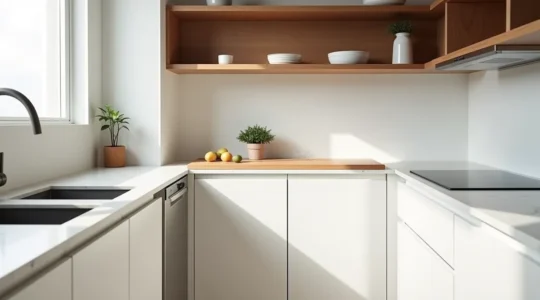
How Do You Engineer a Full Kitchen in Under 6 Linear Feet?
Designing a functional 6-foot kitchen isn’t a matter of compromise; it’s an exercise in precision engineering that replaces the outdated kitchen triangle with a hyper-efficient linear workflow. Success hinges on sequencing four key zones—Cold, Wet, Prep, and Hot—to create a…
Read more
How to Soundproof a Home Office in a Shared Apartment Without Major Construction?
In summary: Effective soundproofing for renters isn’t about total silence but strategic, non-destructive acoustic management. Prioritize sealing air gaps (especially under doors) and treating windows, as these are the weakest points for noise entry. Use mass and absorption principles correctly:…
Read more
How to Use Bespoke Joinery to Increase Property Value in a Competitive Market?
The highest return on investment in a luxury property comes from crafting a narrative of undeniable quality and permanence, a feat best achieved through strategic bespoke joinery. Bespoke joinery is a capital improvement that becomes part of the property’s appraised…
Read more
The Architect’s Guide to Furnishing a 400 Sq Ft Studio for Effortless Hosting
The common belief that small spaces must feel cramped is a myth rooted in static design; the reality is that a 400 sq ft studio can host generously with the right strategy. Fixed, single-purpose furniture creates “dead zones,” while modular…
Read more