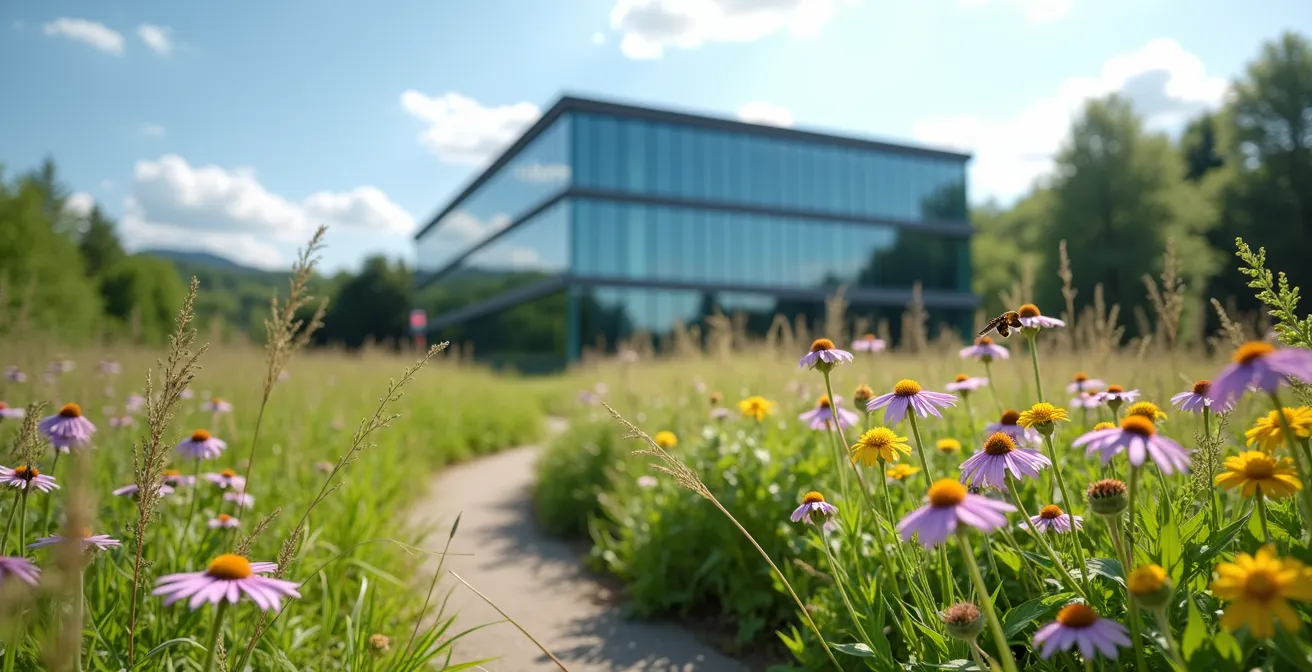
Transforming a corporate lawn into a pollinator habitat is not an expense, but a strategic repurposing of an underperforming land asset that can reduce maintenance costs by over 60%.
- Shifting from aesthetic-focused turf to ecological meadows generates significant long-term savings in mowing, fertilization, and irrigation.
- Success depends on moving beyond “mow and blow” contracts to performance-based agreements that specify ecological outcomes and protect the habitat.
Recommendation: Begin by analyzing your current landscaping contract and calculating the 5-year total cost of ownership for turf grass to build a financial case for conversion.
For decades, the sprawling, manicured turf lawn has been the default landscape for corporate campuses—a green void that is costly to maintain and ecologically sterile. As a facility manager or sustainability director, you’re likely aware of the mounting pressure to improve corporate social responsibility (CSR) metrics and enhance employee wellness. The common solutions often involve complex building retrofits or resource-intensive programs. But what if one of your largest, most underperforming assets could be repurposed to solve these challenges while drastically cutting operational costs?
Many discussions around corporate habitats stop at “planting flowers for bees,” a simplistic approach that misses the profound operational and financial opportunities. The real key isn’t just planting native species; it’s a fundamental shift in land management philosophy. It involves moving away from costly, repetitive maintenance cycles toward creating a self-sustaining ecological asset. This requires a new way of thinking about everything from landscape design to procurement contracts.
This article provides a strategic roadmap for facility managers. We will demonstrate how converting turf grass is a powerful financial decision, not just an ecological one. We will explore how to design for both pollinators and public perception, how to write contracts that protect your investment, and how to leverage your new habitat as a tangible tool for employee wellness. It’s time to stop paying to maintain a green desert and start investing in a landscape that delivers a powerful ecological and financial return.
To guide you through this strategic transformation, this guide details the critical financial, ecological, and operational steps. The following sections break down exactly how to execute a successful conversion, from calculating your ROI to communicating with stakeholders.
Summary: From Cost Center to Corporate Asset: A Pollinator Habitat Guide
- Why Native Meadows Cost 60% Less to Maintain Than Turf Grass?
- How to Ensure Blooms From March to October for Bee Survival?
- Manicured Beds or Wild Patches: Which Is Better for Public Perception?
- The Contract Mistake That Allows Landscapers to Spray Your Bee Garden
- Problem & Solution: Explaining “Weeds” to Visitors via Interpretive Signage
- Wildflower Mix A or B: Which Actually Supports Local Native Bees?
- Why Sedentary Workstyles Cost Companies $1,500 Per Employee Annually?
- How to Rewild a 10-Acre Plot Without angering Neighbors or Zoning Boards?
Why Native Meadows Cost 60% Less to Maintain Than Turf Grass?
The most compelling argument for converting corporate turf is financial. While conventional wisdom focuses on the ecological benefits, the long-term operational savings represent a significant boost to any facility’s budget. Traditional turf grass is an incredibly resource-intensive ground cover, demanding weekly mowing, seasonal fertilization, chemical pest and weed control, and extensive irrigation. Native meadows, once established, function as a largely self-sustaining ecosystem. The initial investment in site preparation and seeding is often higher than simply laying sod, but the return on investment materializes quickly and grows substantially over time. Initial installation costs for a native meadow can range from $3,400 to nearly $6,000 per acre, which can be a point of hesitation.
However, the long-term data reveals the true value. The primary saving comes from the near-elimination of mowing. A native meadow requires only one annual mowing, compared to 20 or more for a corporate lawn. This alone can save over $1,000 per acre annually. Furthermore, established native ecosystems require virtually no fertilizer or pesticide inputs. Research from Natural Shore demonstrates that meadow maintenance can cost as little as $0.06 per square foot annually, compared to $0.20 for turf. Over a 20-year period, the cumulative cost to maintain one acre of prairie can be as low as $3,000, while the same acre of turf could cost upwards of $20,000.
Case Study: Owens Corning’s 98% Cost Reduction
Fortune 500 company Owens Corning provides a powerful real-world example at their Toledo, Ohio campus. By maintaining both turf and native prairie areas, they conducted a direct cost comparison. The results were staggering: annual maintenance for their turf grass cost $6,675 per acre. In contrast, their established prairie grass cost just $140 per acre to maintain—a 98% reduction in operational expenses, proving that ecological conversion is a sound and highly profitable business decision.
How to Ensure Blooms From March to October for Bee Survival?
A successful pollinator habitat is more than just a collection of flowers; it’s a strategically planned, season-long buffet. Many well-intentioned projects fail because they provide a huge floral display for a few weeks in summer, leaving pollinators without resources in the critical early spring and late fall periods. To support entire life cycles, especially for queen bees emerging from hibernation and late-season foragers preparing for winter, you must implement ecological succession planning. This means selecting a diverse palette of native plants that provide continuous, overlapping blooms from the first thaw to the first frost.
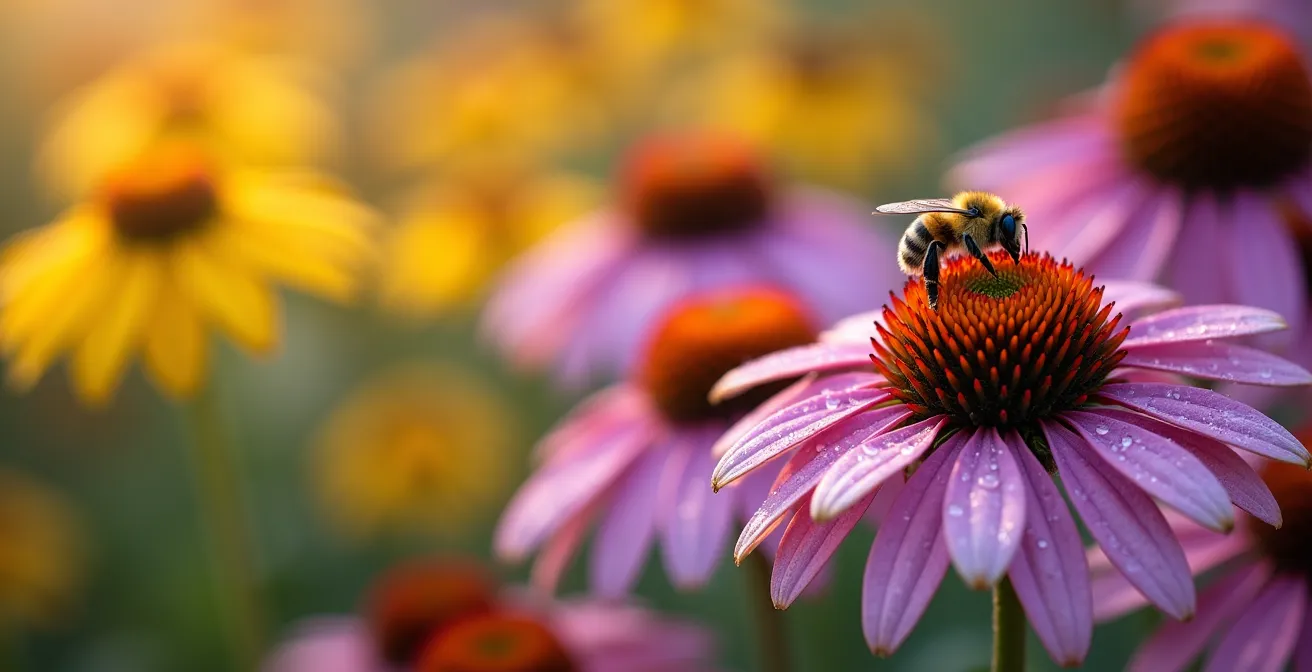
The goal is to layer your plantings to create a non-stop nectar and pollen flow. A well-designed habitat considers not only bloom time but also flower shape and size to cater to bees with different tongue lengths. By thinking like an ecologist, you build a resilient and highly functional habitat. This includes:
- Early Spring (March-April): This is a crucial period of potential starvation. Incorporate native willows, crocuses, and spring ephemerals like Virginia bluebells to support the first emerging queen bees.
- Late Spring (May): As more species become active, diversify the offerings with plants like golden alexanders, wild lupines, and the blossoms of native fruit trees.
- Summer Peak (June-August): This is the easiest period to provision. Layer powerhouse species like coneflowers, bee balm (Monarda), and mountain mint (Pycnanthemum) to attract maximum pollinator diversity.
- Fall Extension (September-October): As winter approaches, late-season forage is vital. Prioritize asters, goldenrod, and Joe-Pye weed, which are essential for migrating monarchs and bees preparing for dormancy.
- Year-Round Structure: Habitat isn’t just about food. Remember to leave patches of bare soil for ground-nesting bees (70% of native species), provide a shallow water source with landing spots, and leave 12-inch plant stems standing through winter as crucial overwintering sites for stem-nesting bees.
Manicured Beds or Wild Patches: Which Is Better for Public Perception?
One of the biggest hurdles to corporate rewilding is aesthetic preference. A purely wild meadow, while ecologically superior, can be perceived by employees, visitors, and neighbors as “messy” or “neglected.” This can undermine the project’s goals by creating negative feedback. A highly manicured, formal garden, on the other hand, is easily recognizable as intentional but often offers lower ecological value and requires more maintenance. The most successful strategy lies in a hybrid approach that uses “Cues to Care.” As the Pollinator Pathway Initiative notes, these are signals of human intention that frame a wilder landscape, making it legible and attractive to the public.
Frame wild-looking areas with crisp mown borders, artistic sculptures, defined pathways, and architectural fencing to signal purposeful management rather than neglect.
– Pollinator Pathway Initiative, Rethink Your Lawn Guide
These cues tell a story of purposeful design, allowing you to achieve high ecological value without sacrificing public acceptance. A clean, 10-foot mown edge around a sprawling meadow, for example, clearly communicates that the wildness is a deliberate choice, not an oversight. This hybrid model allows you to maximize pollinator support while maintaining a polished corporate image.
| Design Approach | Public Perception Score | Maintenance Level | Pollinator Value |
|---|---|---|---|
| Pure Wild Meadow | Low (seen as neglected) | Lowest | Highest |
| Meadow with Mowed Borders | Medium-High (shows intention) | Low | High |
| Formal Pollinator Garden | Highest (traditional aesthetic) | Medium-High | Medium |
| Hybrid Design with Cues to Care | High (best of both) | Low-Medium | High |
The Contract Mistake That Allows Landscapers to Spray Your Bee Garden
Even with the best design and intentions, a pollinator habitat project can be instantly destroyed by a single, uninformed action from a landscaping crew. The root cause is almost always the contract. Standard landscaping agreements are built on an aesthetic of tidiness and control, often including clauses that permit blanket herbicide applications, pesticide use at the first sign of an “infestation,” and aggressive fall cleanups that remove the very stems and leaves essential for overwintering insects. To protect your investment, you must shift from a conventional “mow, blow, and go” agreement to a performance-based ecological contract.
This new type of contract redefines success. Instead of rewarding a crew for how tidy the site looks, it sets clear, measurable ecological targets. It moves the landscaper from a simple laborer to an ecological steward. This requires being explicit about what is allowed and what is forbidden. For example, a contract should state that no pesticides are to be used during bloom periods and that only specific, listed invasive species may be spot-treated, with hand-pulling as the preferred method. This proactive approach prevents catastrophic errors and ensures your landscape provider is a partner in your sustainability goals. It also naturally controls pests by fostering a habitat for beneficial insects, a form of integrated pest management.
Action Plan: Your Ecological Performance Contract Checklist
- Prohibited Practices: Include an explicit clause prohibiting blanket herbicide applications, fall cleanup of beneficial stems/leaves, and use of neonicotinoid-based pesticides during bloom periods.
- Approved Practices: Clearly define acceptable actions, such as spot-treatment for a pre-approved list of invasive species, with hand-pulling as the preferred method, and a mowing schedule aligned with pollinator lifecycles.
- Ecological Targets: Set measurable goals like achieving 75% native plant coverage by year two, zero neonicotinoid detection in annual soil tests, and documented pollinator species counts to define success.
- Contractor Education: Mandate and provide native plant identification training, including visual guides to distinguish protected host plants (like milkweed) from noxious weeds.
- Accountability Measures: Build in requirements for monthly photo documentation, quarterly ecological assessments by a third party, and clear financial penalties for violations of prohibited practices.
Problem & Solution: Explaining “Weeds” to Visitors via Interpretive Signage
Once your habitat is growing, the next challenge is perception. An employee or visitor unfamiliar with native ecosystems may see a monarch-sustaining patch of milkweed and perceive it only as a “weed.” This is a critical communication challenge that, if unaddressed, can generate complaints and pressure to “clean up” the very plants you’re trying to foster. The solution is proactive, on-site education through interpretive signage. Good signage does more than just label plants; it tells a story and reveals the hidden ecological drama unfolding in the landscape.
Instead of dense botanical text, effective signage uses compelling visuals and concise, engaging language to connect a plant to its purpose. A sign next to a stand of goldenrod, for instance, could explain that it’s not a weed but a keystone species that supports over 100 types of native bees in the fall. This instantly transforms perception from “mess” to “function.” By reframing what visitors are seeing, you turn the landscape into an educational asset and a visible testament to your company’s commitment to biodiversity.
Case Study: Washington’s Interactive QR Code Success
The Washington Department of Fish & Wildlife’s habitat program demonstrates the power of modern signage. They use simple signs with QR codes placed throughout their pollinator gardens. When scanned, these codes link visitors to live pollinator cameras, species databases, and information hubs. A visitor wondering about a “weedy” looking plant can instantly identify it as goldenrod and learn about the 115+ species of native bees and butterflies it supports. This interactive approach empowers visitors with knowledge and fosters a deeper appreciation for the habitat’s purpose.
Wildflower Mix A or B: Which Actually Supports Local Native Bees?
Not all wildflower mixes are created equal. A common and critical mistake in habitat creation is purchasing a generic, off-the-shelf “wildflower mix.” These often contain non-native annuals or, more deceptively, “nativars”—native cultivars that have been bred for specific aesthetic traits like double flowers or unusual colors. While they may look beautiful, these alterations can render them useless to local pollinators. As Dr. Doug Tallamy, a leading entomologist, emphasizes, native ecosystems are built on specialist relationships.
Native plants adapted to local environmental conditions require far less water, fertilizer, and mowing than traditional turfgrass once established, while supporting specialist bees that depend on specific native species.
– Dr. Doug Tallamy, Wild Ones Native Plant Society Research
Many native bees are specialists, meaning they can only forage on the plants with which they co-evolved. A cultivar like a double-flowered coneflower may have its nectar and pollen parts bred away, making it an ecological desert for a bee seeking a meal. For a habitat to be truly functional, you must prioritize sourcing straight native species of local ecotype—plants grown from seeds collected in your specific region. This ensures they are perfectly adapted to your climate and are recognizable to local pollinators.
| Plant Type | Pollinator Value | Example | Native Bee Support |
|---|---|---|---|
| Straight Native Species | Maximum (100%) | Wild-type Echinacea purpurea | Supports specialist & generalist bees |
| Native Cultivars | Variable (25-75%) | Echinacea ‘PowWow Wild Berry’ | May lack nectar/pollen or accessibility |
| Double-flowered Cultivars | Minimal (0-10%) | Echinacea ‘Secret Pride’ | Blocked reproductive parts, no value |
| Non-native Annuals | Low (10-30%) | Cosmos, Zinnias | Only generalist bees, no specialists |
Why Sedentary Workstyles Cost Companies $1,500 Per Employee Annually?
The value of a pollinator habitat extends far beyond ecological benefits and landscape savings. It can become a core piece of your company’s employee wellness infrastructure. Sedentary workstyles are a major contributor to employee health issues, with associated costs from lost productivity and healthcare estimated to be as high as $1,500 per employee each year. A well-designed corporate habitat provides a powerful, accessible, and low-cost antidote by encouraging movement, reducing stress, and fostering connection.
By thoughtfully integrating human-centric features into the habitat, you transform it from something to be viewed from a window into an active-use space. This directly addresses wellness goals and boosts the overall “Ecological ROI” of the project. As reported by Best Bees Company, corporations that combine pollinator gardens with employee engagement see measurable improvements in team cohesion and workplace satisfaction scores. The habitat becomes a living lab, a place for mindful breaks, and a dynamic outdoor workspace.
To maximize this benefit, consider these integrations:
- Active Engagement: Design walking paths with distance markers to encourage “5-minute walking meetings” through the habitat.
- Outdoor Workspaces: Install benches or small tables with Wi-Fi extenders, allowing employees to work outside and benefit from the restorative effects of nature.
- Team Building: Create a volunteer “Pollinator Count Fridays” program where teams can engage in citizen science, fostering both movement and a shared sense of purpose.
- HR Partnership: Work with Human Resources to formally integrate habitat use into corporate wellness programs, offering incentives for outdoor breaks or walking meetings.
Key Takeaways
- Converting turf to native meadows is primarily a financial strategy, capable of cutting long-term landscape maintenance costs by over 60%.
- Success hinges on shifting from aesthetic landscaping contracts to performance-based ecological agreements that set clear goals and prohibit harmful practices.
- Public perception is key; use “Cues to Care” like mowed borders and interpretive signage to signal that a wilder landscape is intentional and valuable.
How to Rewild a 10-Acre Plot Without angering Neighbors or Zoning Boards?
Scaling up from a small garden to a large, 10-acre conversion requires a proactive and strategic approach to stakeholder management. On a large scale, concerns from neighbors, Homeowners Associations (HOAs), and municipal zoning boards can quickly derail a project. Common objections relate to perceived messiness, fears of attracting pests or wildlife, and potential violations of local weed ordinances. To succeed, you must approach community engagement with the same rigor you apply to the ecological design.
A formal Stakeholder Communication Playbook is essential. This begins with mapping all relevant parties and anticipating their concerns. Rather than waiting for opposition to build, you initiate the conversation. Hosting an informational open house with professional visual renderings can transform abstract fears into tangible excitement. Submitting a formal Habitat Management Plan to the municipality demonstrates professionalism and a commitment to compliance. As the Audubon Society of Rhode Island notes, well-managed habitats can ultimately become community assets that “enhance property values while supporting biodiversity.”
A phased communication plan ensures all parties feel heard and respected:
- Month 1-2 (Listen & Educate): Map all stakeholders, then host an open house. Present the project not as “letting things go” but as a professionally managed landscape upgrade, complete with data on cost savings and ecological benefits.
- Month 3 (Formalize): Submit a formal Habitat Management Plan to the municipality. This document should detail your plant list, maintenance schedule (e.g., annual mowing), and how you will comply with all local ordinances.
- Month 4 (Demonstrate Care): Create a “good neighbor buffer.” This involves installing highly visible Cues to Care along property lines, such as a 10-foot mowed border, attractive split-rail fencing, or a formal garden bed that transitions into the wilder meadow.
- Ongoing (Engage): Install interpretive signage explaining the project’s benefits, provide quarterly updates via a simple newsletter or community website, and host community participation events like planting days or guided walks.
By reframing your corporate lawn from a cost center to a high-performing asset, you can unlock a powerful suite of financial, ecological, and social benefits. The next logical step is to begin the internal assessment of your current landscape assets and contracts. Evaluate your campus’s potential for habitat conversion today to start building a more resilient and profitable landscape for tomorrow.
Frequently Asked Questions about Corporate Pollinator Habitats
Why does this area look messy with dead stems?
Those hollow stems are natural “bee hotels” where many of our native pollinators overwinter. Up to 30% of native bee species nest in plant stems or wood, so leaving them standing until spring is crucial for their survival.
Are these weeds taking over the garden?
What might look like a weed is often a keystone native species. For example, plants like milkweed and goldenrod are not weeds in this context. Monarch butterflies depend 100% on milkweed for their reproduction, making it a vital component of the habitat.
Why aren’t you removing the brown seed heads?
Those seed heads serve a critical purpose in a four-season ecosystem. They provide a high-energy food source for birds throughout the winter and also offer overwintering sites for many beneficial insects, supporting year-round biodiversity on our campus.