
A successful remote wellness program hinges on strategic integration into daily workflows, not on expensive, standalone perks.
- Focus on micro-interventions and inclusive challenges that require minimal budget but yield high engagement.
- Shift ROI measurement from lagging healthcare savings to leading indicators like productivity, engagement, and manager adoption.
Recommendation: Prioritize creating a supportive culture through consistent, manager-led communication over simply offering another app or stipend.
As an HR director, you’re tasked with the critical goals of improving employee retention and bolstering mental health. In a remote or hybrid environment, this challenge is amplified. The common response is to explore wellness programs, but the conversation quickly gets stalled by budget constraints and the questionable ROI of generic perks like gym stipends or meditation app subscriptions. Many companies find themselves spending money on benefits that see minimal engagement, leading to frustration for both leadership and employees.
These conventional approaches often fail because they treat wellness as a separate, add-on activity rather than a core component of the work experience. They overlook the powerful impact of sedentary workstyles and constant digital interruptions, issues that can’t be solved with a one-off yoga class. The result is a cycle of low participation, unclear value, and a program that quietly fades away after a few weeks, leaving the root problems of burnout and disengagement untouched.
But what if the key to a successful, budget-friendly program wasn’t about adding more, but about integrating better? The most effective strategies focus on embedding small, consistent wellness practices—or micro-interventions—directly into the existing remote workflow. This guide will walk you through a new framework for thinking about remote wellness: one that prioritizes inclusivity, strategic communication, and most importantly, a clear, measurable return on investment that goes far beyond simple healthcare savings.
This article provides a strategic roadmap, moving from the foundational “why” to the practical “how.” We’ll deconstruct common failure points and provide actionable, low-cost solutions to build a program that delivers tangible results for your people and your bottom line.
Summary: A Strategic Guide to Budget-Friendly Remote Wellness
- Why Sedentary Workstyles Cost Companies $1,500 Per Employee Annually?
- How to Run a Step Challenge That Includes Employees With Different Abilities?
- Gym Stipend or Mental Health Day: Which Perk Do Millennials Actually Value?
- The Communication Error That Kills Wellness Participation in Week 2
- Problem & Solution: Measuring Wellness ROI Beyond Healthcare Savings
- Why Employees Forget 70% of Video Content Within 24 Hours?
- How to Do a “Body Scan” During a Zoom Meeting Without Anyone Knowing?
- How to Use Mindfulness to Reset Attention After Constant Interruptions?
Why Sedentary Workstyles Cost Companies $1,500 Per Employee Annually?
The first step in building a case for any wellness program is to define the cost of inaction. For remote teams, the most significant and often underestimated threat to employee well-being and productivity is the sedentary nature of desk work. An employee sitting for eight hours a day is not just a posture issue; it’s a direct drag on your company’s financial health. The impact materializes through increased absenteeism, presenteeism (working while sick), and a measurable decline in cognitive function and overall productivity.
The financial toll is staggering. Worker illness and related productivity losses are a major expense for U.S. employers. In fact, research shows these costs can reach as high as $225.8 billion annually, or $1,685 per employee. This isn’t a vague, long-term healthcare risk; it’s an immediate operational cost. When employees are physically stagnant, they experience higher rates of fatigue, musculoskeletal pain, and chronic conditions, all of which translate directly into more sick days and lower output.
Framing the wellness initiative as a direct countermeasure to this quantifiable productivity loss is crucial for securing buy-in. It shifts the conversation from a “nice-to-have” employee perk to an essential business strategy. The goal isn’t just to make employees feel good; it’s to create an environment where they can perform at their best. By investing in programs that encourage movement and mitigate sedentary effects, you are directly investing in your company’s operational efficiency and bottom line.
How to Run a Step Challenge That Includes Employees With Different Abilities?
Step challenges are a popular, low-cost wellness initiative, but their traditional format often fails in a key area: inclusivity. A program that only rewards walking or running inherently excludes employees with mobility limitations, those recovering from injuries, or individuals whose preferred activities aren’t easily measured in steps. This creates a two-tiered system where some employees feel motivated and others feel left out, defeating the program’s purpose of fostering team-wide well-being.
The solution is to move from a step-based model to an activity-minute conversion model. This approach creates a universal currency for effort, allowing every employee to participate on equal footing. Instead of tracking steps, the program tracks minutes of intentional activity, with different activities earning points based on intensity and accessibility. This ensures that an employee doing seated yoga or water therapy can compete and contribute alongside a marathon runner.
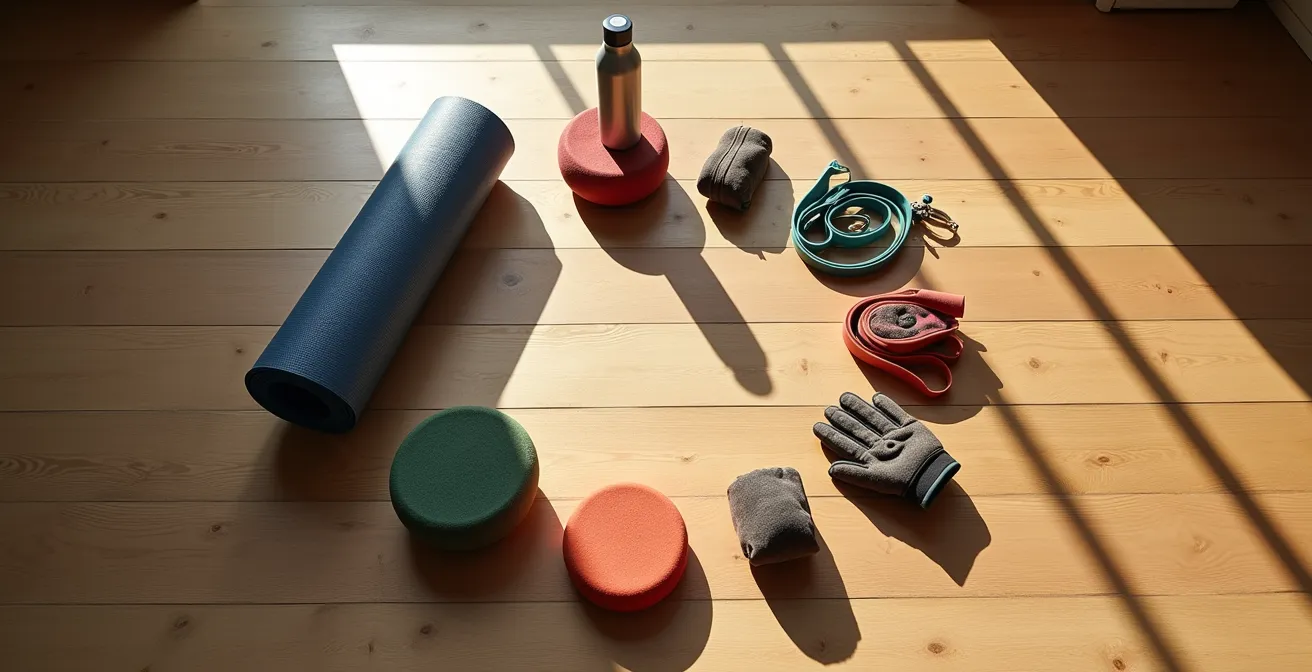
By designing the challenge for inclusivity from the start, you foster a sense of unity and shared purpose. Everyone’s effort is valued, which dramatically increases buy-in and sustained participation. A simple chart can be created to guide employees on how to log their activities, making the system transparent and easy to follow. For instance, you could implement a system like the one suggested by the CDC’s resources on physical activity for people with disabilities.
The following table provides a framework for converting various activities into a unified point system, ensuring your wellness challenge is truly for everyone.
| Activity Type | Intensity Level | Points per 10 Minutes | Accessibility Features |
|---|---|---|---|
| Walking/Rolling | Moderate | 10 points | Wheelchair accessible |
| Swimming/Water Therapy | Low-Moderate | 15 points | Joint-friendly |
| Seated Yoga | Low | 8 points | Chair-based |
| Gardening | Low-Moderate | 10 points | Adaptable positioning |
| Mindfulness/Meditation | Mental wellness | 5 points | No physical requirements |
| Resistance Band Training | Variable | 12 points | Customizable resistance |
Gym Stipend or Mental Health Day: Which Perk Do Millennials Actually Value?
When budgets are tight, HR leaders often face a choice between tangible physical wellness perks like a gym stipend and mental health support like a designated “mental health day.” While both seem valuable, their impact and adoption rates can differ significantly. The debate isn’t just about the perk itself, but about the underlying message it sends and the corporate culture it reflects. A gym stipend is a resource, but a mental health day is permission—permission to rest without stigma.
For many employees, especially younger generations, the primary barrier to wellness isn’t access or cost; it’s the lack of a supportive culture. Offering a gym membership doesn’t address the employee who feels too burnt out to use it or the team member who fears being seen as “slacking” if they take time for themselves. This is where the true value lies: in creating an environment of psychological safety where employees feel empowered to prioritize their well-being.
As experts in the field note, the effectiveness of any wellness initiative is contingent on the company’s culture. Dr. Sandra Turner, a key developer of Ernst & Young’s mental health program, emphasizes this point:
We need to have the right culture – one where people trust that coming forward about their struggle with mental health will not affect their job.
– Dr. Sandra Turner, Ernst & Young’s mental health program developer
This highlights a critical insight for any ROI-focused strategist: the most valuable “perk” is not a financial subsidy but a cultural shift. A mental health day, when genuinely supported by leadership, does more than provide a day off. It signals that the organization trusts its employees and values rest as a critical component of performance. While a gym stipend might be used by a few, a trusted and destigmatized mental health policy benefits everyone by fostering a healthier, more resilient work environment.
The Communication Error That Kills Wellness Participation in Week 2
You’ve launched your wellness program with a great kick-off email. Initial sign-ups are strong. But by the second week, engagement plummets. Why? The most common failure point is a passive communication strategy. A single launch announcement and a weekly leaderboard are not enough to sustain momentum. Without consistent, integrated, and manager-led communication, even the best-designed program will be forgotten amidst daily deadlines.
Effective wellness communication is not about broadcasting; it’s about embedding cues and conversations into the existing workflow. The responsibility for this cannot rest solely on HR. Managers are the most critical channel for driving sustained engagement. When a manager models wellness behaviors and regularly checks in on their team’s well-being, it transforms the program from an HR initiative into a team priority. This doesn’t require lengthy meetings; it can be achieved through small, consistent “micro-interventions.”
A successful case was seen in a mid-sized tech company with a fully remote workforce. They implemented a communication strategy that was key to their success.
Case Study: The Power of the Monday Team Rally
To keep engagement high during a company-wide challenge, a remote tech company held weekly Monday “Team Rally” webinars. During these short calls, teams shared their progress from the previous week, celebrated individual and group wins, and offered encouragement. This simple, consistent communication ritual fostered a strong sense of camaraderie and accountability. As a result, one of their teams won the entire company-wide challenge, with each remote member receiving a team winner t-shirt at home, further reinforcing the shared success.
Empowering managers to become wellness champions is the most cost-effective way to drive participation. Providing them with a simple toolkit can make all the difference. The focus should be on quick, easy actions that can be integrated into their daily routines.
Your Manager’s 3-Minute Wellness Champion Toolkit
- Daily Stand-up Integration: Add “What’s your energy level today on a scale of 1-10?” to check-ins. This takes 30 seconds per person and normalizes conversations about well-being.
- 1-on-1 Question Bank: Equip managers with questions like, “What would help you feel more energized this week?” or “Have you had a chance to try any of the wellness resources?”
- Model the Behavior: Encourage managers to share their own wellness wins, such as, “I took a walking meeting yesterday and felt much more creative afterward.”
- Contextual Nudges: Before long meetings, suggest managers post in the chat: “Pro tip: Feel free to stand and stretch during this call if you need to.”
- Recognition Ritual: End the week by having managers acknowledge one person in their team who visibly prioritized their well-being that week.
Problem & Solution: Measuring Wellness ROI Beyond Healthcare Savings
One of the biggest hurdles in getting budget approval for a wellness program is proving its return on investment. Traditionally, companies have relied on “lagging indicators” like reduced healthcare claims or lower absenteeism rates. The problem? These metrics can take years to materialize, making them impractical for demonstrating short-term value. This forces HR leaders into a defensive position, unable to prove the program’s worth in a timeframe that satisfies stakeholders.
The solution is to shift the focus from lagging outcomes to leading and proxy indicators. Leading indicators are predictive metrics that measure engagement and adoption in real-time, while proxy indicators measure the immediate business impact on factors like productivity and creativity. These metrics provide instant feedback on what’s working and allow you to build a compelling ROI case from the very first month. For example, tracking weekly participation rates or the frequency of wellness tool logins can predict the long-term engagement trajectory.
Similarly, proxy metrics can connect wellness directly to performance. A team that is less stressed and more focused will likely have a faster response time on complex support tickets or submit more innovative ideas. By tracking these operational KPIs alongside wellness engagement, you create a powerful correlation that demonstrates immediate business value. This data-driven approach transforms the ROI conversation from speculative future savings to tangible present-day gains in efficiency and innovation.
The following table, based on common productivity analysis frameworks, distinguishes between the types of indicators you should track to build a robust, multi-layered ROI case.
| Indicator Type | Metric | Measurement Frequency | ROI Connection |
|---|---|---|---|
| Leading (Predictive) | Weekly participation rates | Weekly | Predicts engagement trajectory |
| Leading | Manager wellness mentions in 1-on-1s | Bi-weekly | Indicates culture adoption |
| Leading | Wellness tool login frequency | Daily | Shows actual usage vs enrollment |
| Proxy | Average response time on complex tickets | Weekly | Measures focus/productivity |
| Proxy | New ideas submitted to suggestion box | Monthly | Indicates creativity/engagement |
| Lagging (Outcome) | Employee turnover rate | Quarterly | Final impact on retention |
| Lagging | Healthcare claims data | Annual | Long-term cost savings |
Why Employees Forget 70% of Video Content Within 24 Hours?
You’ve invested time creating a fantastic 5-minute video on stress management techniques. You share it in the company-wide channel, and it gets a few dozen views. A week later, no one remembers the techniques, and behavior hasn’t changed. This is a classic example of the “Ebbinghaus Forgetting Curve” in action. People naturally forget the majority of new information shortly after learning it unless it is reinforced. Simply providing content, even high-quality video, is not enough to drive lasting change.
To overcome this, you must shift from a “content delivery” mindset to a “learning reinforcement” strategy. The key is spaced repetition: re-exposing employees to the core concepts in different formats at strategic intervals. This technique interrupts the forgetting process and transfers the information from short-term to long-term memory, making it far more likely to be applied. A single video becomes the starting point for a multi-day micro-learning campaign.
This approach doesn’t require creating massive amounts of new content. It’s about strategically repurposing and prompting. For example, a successful tactic used by many companies involves leveraging free, high-quality guided mindfulness sessions from platforms like YouTube. The value isn’t just in sharing the video, but in scheduling a time for employees to practice together virtually, even for just a few minutes, and then following up with gentle reminders to use the learned techniques.
Here is a practical implementation of a spaced repetition schedule for a single piece of wellness content:
- Day 1: Share a 3-minute micro-learning video on a stress management technique (e.g., the 4-7-8 breathing method).
- Day 2 (24 hours later): Send an automated Slack or Teams prompt: “Yesterday you learned the 4-7-8 breathing technique. Try it for 60 seconds right now.”
- Day 4: Post a quick poll in the team channel: “Who tried the breathing exercise this week? React with 👍 if yes, 💭 if you forgot.” This creates social accountability.
- Day 7: Share a 2-minute follow-up video showing the same technique being applied in a different scenario (e.g., before a presentation vs. after a difficult call).
- Day 14: Issue an integration challenge: “This week, use the technique before one stressful event and share your experience in our wellness channel.”
How to Do a “Body Scan” During a Zoom Meeting Without Anyone Knowing?
One of the biggest challenges for remote employees is the relentless nature of back-to-back virtual meetings. This “Zoom fatigue” leads to mental exhaustion and physical tension. While a full meditation session is impractical, employees can use discreet “micro-interventions” to ground themselves and release tension without ever turning off their camera or losing track of the conversation. The body scan is a powerful mindfulness technique that can be adapted for this exact purpose.
A traditional body scan involves lying down and systematically focusing on different parts of the body. The in-meeting version is a rapid, subtle, and tactile-focused adaptation. Instead of a lengthy mental process, it uses physical anchor points to quickly bring awareness back to the present moment. This “tactile anchor scan” can be completed in under 10 seconds, making it a perfect tool to use during transitions when another person is speaking.
The goal is not to zone out, but to zone *in* for a brief moment. By consciously noticing physical sensations—the feeling of your feet on the floor or your back against the chair—you interrupt the cycle of mental chatter and physical tension. This micro-reset can significantly improve focus and reduce the cumulative stress of a long day of meetings. The key is to make it a discrete, repeatable habit that can be performed anywhere, anytime.
Here is a simple, 10-second technique that employees can practice during any virtual call:
- Seconds 1-3 (Feet): Focus on your feet flat on the floor. Gently press your toes down and notice the pressure against your shoes or the ground.
- Seconds 4-6 (Back): Shift your attention to your back against the chair. Notice the points of contact and subtly adjust your posture to sit up straighter if needed.
- Seconds 7-9 (Hands): Become aware of your fingers resting on the keyboard or mouse. Feel the texture of the surface without moving them.
- Second 10 (Breath): Take one single, intentional breath while maintaining your on-screen presence and listening to the meeting.
Key Takeaways
- The ROI of wellness is proven through leading indicators like productivity and engagement, not just long-term healthcare savings.
- Inclusivity is non-negotiable; design challenges around activity-minutes, not just steps, to ensure everyone can participate.
- Sustained engagement is driven by manager-led, workflow-integrated communication, not one-off HR announcements.
How to Use Mindfulness to Reset Attention After Constant Interruptions?
In a remote setting, interruptions are constant. A Slack notification, a quick question from a colleague, a home-life distraction—each one shatters your focus and forces a “context switch.” The mental energy required to disengage from one task and re-engage with another is a massive, hidden productivity drain. Simply trying to power through leads to shallow work and increased stress. Mindfulness offers a strategic solution: a structured ritual to consciously manage these transitions.
Instead of letting interruptions dictate your mental state, you can implement a “2-Minute Context Switch Ritual.” This is a deliberate pause taken between tasks to clear your mental slate and set a clear intention for what comes next. It acts as a buffer, allowing your brain to fully disengage from the previous context before diving into a new one. This practice transforms the chaotic nature of remote work into a more controlled and intentional workflow.
This ritual is not about meditation in the traditional sense; it is a functional routine composed of physical and mental resets. By creating a clear demarcation between activities—closing browser tabs, doing a quick stretch, and stating your next task—you signal to your brain that it’s time to refocus. This small investment of two minutes can save much more time in the long run by reducing the “spin-up” period it normally takes to get into a state of deep work.

Here is a simple ritual that any employee can use to reset their attention throughout the day:
- Physical Reset (30 seconds): Close all unrelated browser tabs and applications. Stand up from your chair and do three slow shoulder rolls backward.
- Mental Clear (30 seconds): Look away from your screen. Mentally name five blue objects you can see in your room, or trace a figure-eight pattern on the wall with your eyes.
- Intention Setting (30 seconds): State your next task out loud or write it on a sticky note. For example, “I am now focusing on drafting the quarterly report.”
- Transition Breath (30 seconds): Take three deep breaths. On each exhale, imagine you are releasing the previous task and any lingering thoughts associated with it.
To truly transform your remote work environment, the next logical step is to equip your managers with these strategies and empower them to build a culture of well-being from the ground up. Begin by integrating these low-cost, high-impact micro-interventions into your team’s daily routines and start tracking the leading indicators that prove their value.