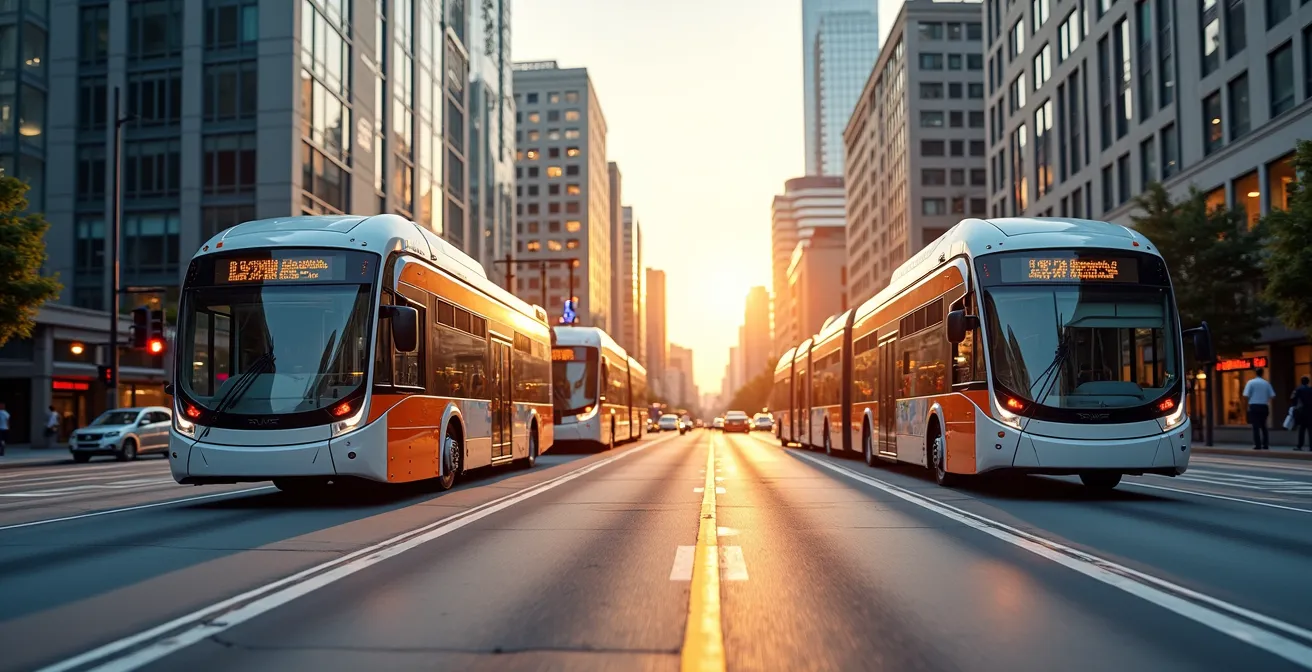
AI transit optimization is not just about cutting costs; it’s a powerful tool for building a more equitable and trusted public service.
- AI can identify hidden traffic patterns to improve on-time performance and reduce fleet size.
- Technical success is irrelevant without a governance framework that prioritizes data privacy and public communication.
Recommendation: Focus on hybrid Edge/Cloud models and co-designing services with the community to ensure both technical efficiency and systemic trust.
As a municipal transport official, you stand at a difficult crossroads. On one side, you face relentless pressure to cut budgets and increase operational efficiency. On the other, you field daily complaints about service delays, infrequent buses, and routes that fail to serve the community’s real needs. The conventional wisdom suggests a trade-off: you can either have efficiency or public satisfaction, but rarely both. Many proposed solutions involve complex scheduling overhauls or service cuts that only alienate the daily commuters you aim to serve.
But what if the key wasn’t simply a better schedule, but a smarter system? Artificial intelligence is often touted as a silver bullet for efficiency, promising to slash fuel costs and untangle traffic. However, this technology-first approach misses the fundamental point. The true, sustainable value of AI in public transit lies not in its raw computational power, but in its potential to build a foundation of algorithmic governance and public trust. It’s about creating a system that is not only more efficient but also more responsive, equitable, and transparent for every citizen.
This guide moves beyond the hype to provide a solution-oriented framework for city planners. We will explore how AI can deliver concrete cost savings and service improvements, but more importantly, we will dissect the critical human factors—privacy, equity, and trust—that determine whether an AI-driven transit system succeeds as a valued civic service or fails as another top-down, disruptive technology project. We will show you how to leverage AI to solve logistical puzzles while simultaneously strengthening your relationship with the community.
For those who prefer a visual summary, the following video provides an excellent case study on the Boston Public Schools project, which used AI to transform its busing system, highlighting the very challenges and opportunities we discuss.
This article provides a comprehensive roadmap for integrating AI into your transit strategy. We will cover everything from the core technological advantages to the critical governance frameworks required for a successful and citizen-centric implementation.
Summary: A Planner’s Roadmap to AI-Powered Transit
- Why AI Algorithms Eliminate Traffic Jams That Human Controllers Miss?
- How to Cut Municipal Fleet Fuel Costs by 12% With AI Braking Systems?
- Centralized Cloud or Edge AI: Which Manages Rush Hour Latency Better?
- The Privacy Oversight That Could Lead to a $1 Million Data Fine
- Problem & Solution: Bridging the Suburban Gap With AI-Routed Shuttles
- Why Your Analytics IP Addresses Count as Protected Data?
- Why Elderly Patients Refuse Video Calls Even for Simple Checkups?
- How to Prepare Your Tech Startup for GDPR and CCPA Compliance?
Why AI Algorithms Eliminate Traffic Jams That Human Controllers Miss?
Human traffic controllers and schedulers are experts at managing known patterns—the predictable morning and evening rush hours. However, they struggle to process the thousands of micro-variables that create unexpected gridlock. This is where artificial intelligence offers a fundamental advantage. AI systems excel at identifying “predictive cascades,” where a series of small, seemingly unrelated delays across a network signal an impending traffic jam 30 minutes or more in advance. They achieve this by processing vast, heterogeneous data streams in real time, from GPS signals and weather reports to traffic sensors and even social media sentiment.
The result is a level of foresight that is humanly impossible. While a human planner reacts to a traffic jam once it’s visible, an AI model anticipates and reroutes vehicles to prevent it from forming. Studies show that modern AI systems achieve predictive accuracy rates of 85-95%, turning reactive management into proactive network optimization. This capability allows the system to see the city not as a collection of individual routes, but as a single, dynamic organism where a small adjustment in one area can prevent a major blockage in another.
Case Study: Boston Public Schools’ Routing Revolution
Faced with a complex system of over 650 buses, Boston Public Schools partnered with MIT to develop an AI routing algorithm. By analyzing a staggering number of routing options (1 novemtrigintillion, or 10^120), the system did more than just create efficient paths. It used predictive cascade modeling to understand how small delays would ripple through the entire network. The result was a system that cut the fleet by 50 buses, saving the city $5 million annually while simultaneously improving on-time performance for thousands of students.
This move from reactive to predictive control is the core reason AI can find efficiencies that remain invisible to human planners. It’s not about working harder; it’s about understanding the city’s circulatory system at a level of detail that was previously unimaginable.
How to Cut Municipal Fleet Fuel Costs by 12% With AI Braking Systems?
While route optimization provides macro-level savings, significant efficiencies can also be found at the micro-level of individual vehicle operation. Fuel consumption is heavily influenced by driving behavior, particularly acceleration and braking patterns. AI-powered systems can dramatically reduce these costs by optimizing what is known as “predictive coasting” and braking. By integrating with real-time traffic data and understanding the topography of a route, the AI can advise the driver—or in advanced systems, control the powertrain—to coast at optimal moments or apply gentle, regenerative braking far in advance of a stoplight.
This technology transforms every red light and downhill slope into a fuel-saving opportunity. An AI system knows a light two kilometers away is about to turn red and can disengage the engine to coast, whereas a human driver would likely keep accelerating for another kilometer. This not only saves fuel but also significantly reduces wear and tear on brake systems, a major maintenance expense for any fleet. The technology works by creating a smooth, efficient driving profile that is impossible for a human to replicate consistently over an eight-hour shift.
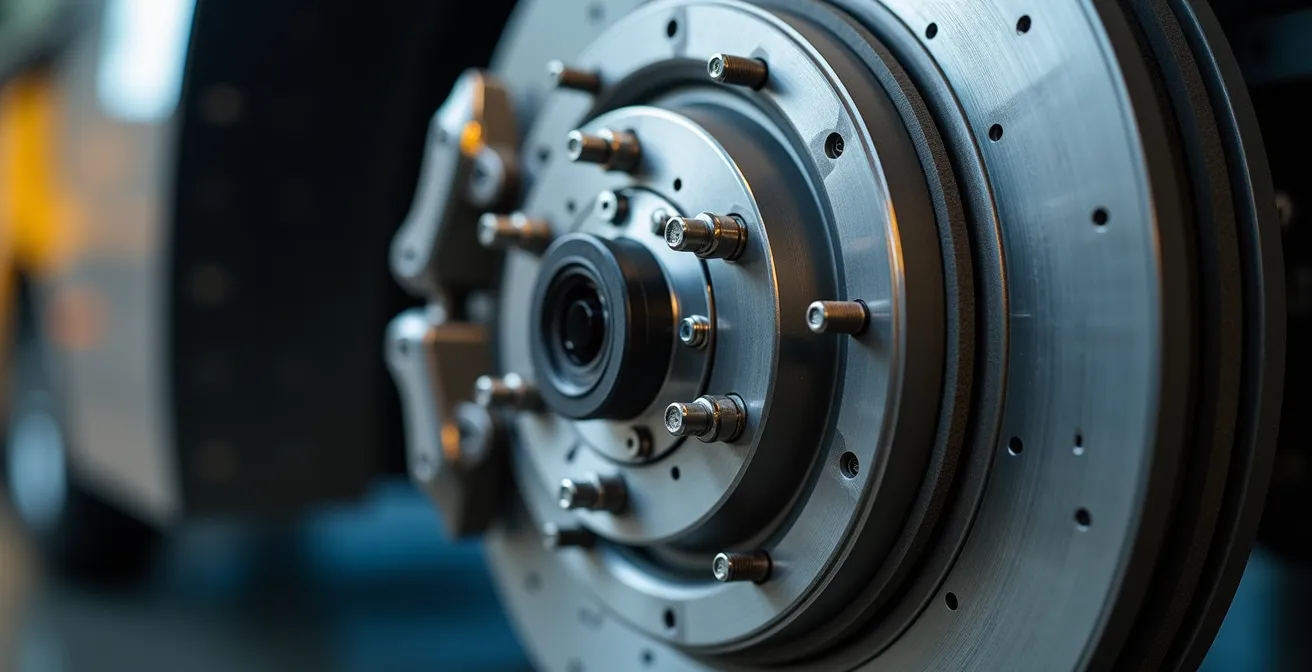
As seen in the components of a modern bus, these systems rely on a network of sensors that feed data into the AI model. These optimizations compound over thousands of trips, leading to substantial and predictable budget relief.
The following table, based on an analysis of AI-driven fleet management systems, breaks down the potential savings from different optimization methods, showing how they contribute to a rapid return on investment.
| Optimization Method | Fuel Savings | Maintenance Reduction | ROI Timeline |
|---|---|---|---|
| AI Predictive Coasting | 10-12% | 15-18% | 8-12 months |
| Route Optimization | 11-15% | 12% | 6-8 months |
| Driver Behavior Analysis | 5-10% | 20% | 3-6 months |
| Combined AI Systems | 15-20% | 20-30% | 12-24 months |
Centralized Cloud or Edge AI: Which Manages Rush Hour Latency Better?
When implementing an AI transit system, a critical architectural decision is where the “thinking” happens: in a centralized cloud or on the “edge” of the network (i.e., on the vehicle itself). This choice has significant implications for performance, especially during rush hour when instantaneous decisions are paramount. A centralized Cloud AI model aggregates data from the entire fleet to make network-wide strategic decisions, like rerouting a dozen buses to avoid major congestion. Its strength is its holistic view.
However, sending data to the cloud and waiting for a response introduces latency, which can be a critical failure point for safety-sensitive operations. This is where Edge AI comes in. An edge device on each bus processes data locally for immediate, sub-millisecond decisions, such as activating an automatic emergency brake or adjusting speed to maintain safe following distance. It doesn’t need to ask the cloud for permission to avoid a collision.
During rush hour, this distinction becomes vital. Network-wide route adjustments can tolerate a few seconds of latency, making them suitable for the cloud. But collision avoidance and real-time passenger information systems demand the instant response of edge computing. For this reason, the most robust and resilient transit systems use a hybrid model.
The hybrid model combining Edge AI for instantaneous decisions on the vehicle with Cloud AI for macro-level network analysis represents the gold standard for transit management.
– Research findings, Understanding AI route optimization
This hybrid approach provides the best of both worlds: the strategic, big-picture intelligence of the cloud combined with the tactical, real-time responsiveness of the edge. This ensures your system is both smart and safe, capable of managing complex network flows without compromising on-the-ground performance.
The Privacy Oversight That Could Lead to a $1 Million Data Fine
The immense power of AI in transit optimization is fueled by data—specifically, location and movement data from thousands of citizens. As a municipal official, you are not just an operator but a data steward, and a failure in this role can have catastrophic financial and political consequences. Regulations like Europe’s GDPR and California’s CCPA have redefined what constitutes personal data, and the penalties for non-compliance are severe. Under GDPR, for example, violations can result in fines up to €20 million or 4% of global turnover, whichever is higher.
A common and dangerous oversight is the failure to recognize that anonymized data can often be “re-identified.” A dataset showing a device’s journey from a specific suburban home to a downtown office building every weekday is no longer anonymous. This sensitive information, if breached, can expose citizens to significant personal risk. The public’s trust in a new AI system is incredibly fragile, and a single privacy scandal can derail a technically brilliant project.
Case Study: The Boston Schools Algorithm Backlash
In 2017, the same Boston Public Schools system that achieved technical success with its AI routing faced a massive public backlash. The algorithm recommended changing school bell times to further optimize routes and save an additional $5 million. However, the project failed to adequately communicate how these decisions were made and what privacy protections were in place. Parents, feeling that a “black box” algorithm was dictating their family lives, protested vehemently. Despite the clear financial benefits, the public outcry was so intense that the city was forced to cancel the plan, demonstrating that systemic trust is more valuable than technical efficiency.
This example serves as a stark warning: without a robust, transparent privacy framework and clear public communication, even the most promising AI initiatives are destined to fail. The risk is not just a fine; it’s a complete erosion of public confidence in your administration’s ability to innovate responsibly.
Problem & Solution: Bridging the Suburban Gap With AI-Routed Shuttles
One of public transit’s most persistent challenges is the “first-mile/last-mile” problem, particularly in low-density suburban areas where fixed-route buses are inefficient and underused. Residents are often too far from a bus stop to make transit a viable option, forcing them into personal vehicles and adding to congestion. AI-powered, on-demand shuttle services offer a powerful solution to bridge this “suburban gap” and foster predictive equity.
Instead of running large, empty buses on fixed schedules, a fleet of smaller shuttles can be dynamically routed by an AI based on real-time passenger requests. The system groups riders traveling in the same general direction, creating a flexible, highly efficient service that functions like a shared taxi. This model makes public transit accessible and convenient for residents who were previously disconnected from the main transit corridors. It transforms the system from a rigid network into a responsive, demand-driven service.
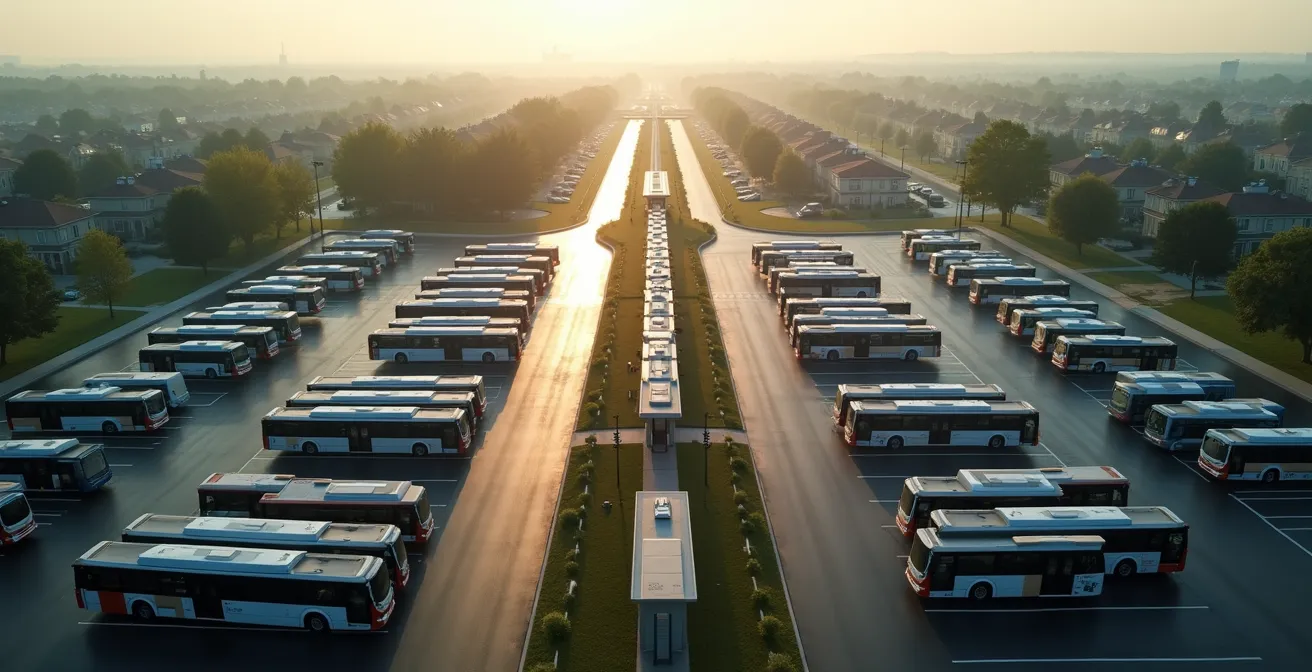
By creating these integrated hubs, cities can extend the reach of their transit networks without the massive cost of expanding fixed-route infrastructure. According to industry analyses, AI-routed shuttle services can achieve a 20-25% increase in delivery capacity compared to traditional dial-a-ride systems, serving more people with fewer vehicles. This approach not only improves mobility but also promotes equity by ensuring all residents have access to reliable public transportation.
Successfully launching such a service requires a strategic approach. It involves defining service zones, integrating with existing transit, and providing clear communication to build rider confidence. It is a targeted investment in service equity that pays dividends in ridership and community satisfaction.
Why Your Analytics IP Addresses Count as Protected Data?
In the world of data privacy, one of the most misunderstood elements by non-technical stakeholders is the IP address. Many assume it’s an anonymous technical identifier. However, under regulations like GDPR, an IP address is legally considered Personally Identifiable Information (PII) because it can be used to pinpoint a user’s location, and when combined with other data, their identity. For a transit authority, this has profound implications.
When a citizen uses your mobile app to request a route, you collect their IP address, a timestamp, and their desired origin and destination. This data combination is no longer anonymous; it’s a detailed log of an individual’s movements and intentions. If this data were to be breached or used improperly, it could reveal sensitive patterns, such as visits to a hospital, a place of worship, or a political meeting. Therefore, treating IP addresses with the same level of security as a person’s name or home address is not just a best practice; it is a legal requirement.
When an IP address is combined with a route request and timestamp, it becomes a powerful piece of personal data that can track a user’s movements and must be treated as personally identifiable information.
– Privacy compliance experts, Transportation Data Protection Guidelines
Protecting this data requires a “Privacy by Design” approach, where safeguards are built into the system from the very beginning. This includes techniques like data hashing, dissociation, and implementing strict data retention policies. Failure to do so exposes your municipality to significant legal liability and, more importantly, constitutes a breach of trust with the citizens you serve.
Action Plan: Auditing Your IP Address Data Protection
- Points of Contact: List all systems where IP addresses are collected (e.g., mobile app, Wi-Fi on buses, trip planning website).
- Data Collection Inventory: For each point, inventory exactly what other data is collected alongside the IP (e.g., timestamp, route request, device ID).
- Coherence Check: Confront this data collection with your public privacy policy. Does your policy clearly state you collect this data and for what purpose? Is it justified?
- Memorability & Emotion: Assess your data handling. Are you using techniques like IP hashing or dissociation to minimize risk, or are you storing raw, identifiable logs?
- Integration Plan: Create a prioritized plan to implement changes. This should include dissociating IPs from travel patterns immediately after a trip is completed and setting automatic deletion policies for raw logs.
Why Elderly Patients Refuse Video Calls Even for Simple Checkups?
At first glance, the reluctance of an elderly patient to use telemedicine seems unrelated to bus routes. However, the underlying reason is identical and serves as a crucial lesson in public technology adoption: a lack of trust in unfamiliar systems that replace known, predictable ones. An older person may not trust that a doctor can accurately diagnose them through a screen, just as a lifelong commuter may not trust that a “black box” algorithm can get them to work on time better than the printed schedule they’ve used for 20 years.
The problem is not the technology itself, but the failure to build a bridge of trust. When we introduce a new AI-driven system, we are asking people to abandon a predictable, if imperfect, process for one that is opaque and feels out of their control. This friction is a human factor, not a technical one, and it cannot be solved with a better algorithm. It can only be solved with empathy, communication, and a commitment to a human-in-the-loop approach.
Just as an elderly patient distrusts a video call’s diagnostic accuracy, lifelong commuters distrust an AI’s ability to get them to work on time compared to their familiar, printed schedule. The core issue is trust in a new, unfamiliar system that replaces a known, predictable one.
– Media.mit.edu, What the Boston School Bus Schedule Can Teach Us About AI
Building this systemic trust requires a dedicated effort. It’s about acknowledging user anxiety and providing a clear, gradual path to adoption. Key strategies include:
- Co-designing services with community groups, especially seniors and other skeptical demographics, to give them ownership.
- Offering human-staffed tutorials and support hotlines to demystify the new tools.
- Maintaining predictable, core timetabled services during the transition to provide a safety net.
- Providing information through both digital and traditional channels, so no one is left behind.
Key Takeaways
- AI’s primary advantage is not just efficiency but its ability to perform predictive analysis that is impossible for human planners.
- Successful implementation requires a hybrid Edge/Cloud architecture to balance strategic oversight with real-time safety.
- Public trust is paramount; technical success is meaningless without transparent data governance and clear community engagement, as demonstrated by the Boston case studies.
How to Prepare Your Tech Startup for GDPR and CCPA Compliance?
As a municipal leader, you may not be running a tech startup, but you will almost certainly be partnering with one. Therefore, understanding how to evaluate a vendor’s compliance with data protection laws like GDPR and CCPA is a critical part of your due diligence. Choosing a partner who is unprepared for these regulations is the same as choosing to inherit their liability. Your procurement process must be a rigorous audit of a potential partner’s commitment to data stewardship.
Your first question should not be “How good is your algorithm?” but “Show me your Data Protection Impact Assessment (DPIA).” This document should detail the data being collected, the purpose of its use, and the specific measures taken to mitigate privacy risks. A vendor who cannot produce a thorough DPIA is a major red flag. Similarly, you must demand to see their data processing agreement (DPA), a legally binding contract that outlines their responsibilities in handling your citizens’ data.
Key areas to scrutinize in a potential vendor include:
- Data Minimization: Does their system collect only the absolute minimum data necessary to function? Or does it collect extraneous information “just in case”?
- Purpose Limitation: Is it contractually guaranteed that the data will only be used for the explicit purpose of transit optimization and not for marketing or other secondary uses?
- User Rights anagement: Do they have a clear, tested process for handling citizen requests to access, correct, or delete their personal data, as required by law?
Ultimately, a compliant partner views privacy not as a bureaucratic hurdle, but as a core feature of their product. They will speak the language of “Privacy by Design” and be able to demonstrate, with documentation and clear system architecture, how they protect data at every step. Holding your vendors to this high standard is the most effective way to protect your municipality and your citizens.
To effectively navigate this complex landscape, your next step is to develop a comprehensive due diligence checklist for evaluating potential AI vendors, ensuring they align with your city’s commitment to both innovation and public stewardship.
Frequently Asked Questions on AI in Transit Management
What are the upfront costs differences between Edge and Cloud AI?
Edge AI requires higher initial hardware investment but offers lower data transmission costs and better privacy protection, while Cloud AI operates on a subscription model with lower upfront costs but creates ongoing operational expenses.
How do latency requirements differ during rush hour?
Edge AI provides sub-millisecond response times for critical safety decisions like collision avoidance, while Cloud AI handles network-wide optimization with acceptable 1-3 second latency for route adjustments.
Which approach scales better for growing transit systems?
Cloud AI scales more easily through increased server capacity, while Edge AI requires physical hardware upgrades on each vehicle, making hybrid models the most flexible solution.