Contrary to popular belief, an immutable blockchain ledger does not guarantee truth; it only guarantees that a record, true or false, can never be changed.
- The primary failure point for blockchain in supply chains is corrupt data at the source—the “Garbage-In, Gospel-Out” problem.
- Success depends on architecting a robust “digital-physical linkage” using verified IoT sensors, multi-party validation, and user-centric interfaces.
Recommendation: Shift your focus from the blockchain platform itself to designing a ‘trust-at-the-source’ ecosystem that ensures data is verified *before* it becomes immutable.
For a supply chain director, the promise of blockchain is immense: a single, tamper-proof version of the truth that can definitively prove the origin and ethical journey of every raw material. The industry narrative suggests this technology is a silver bullet for transparency, a way to finally silence accusations of greenwashing and build unshakeable consumer trust. In a world where supply chain disruptions can cost an organization an average of $184 million annually, the appeal of such a resilient system is undeniable.
However, this narrative often omits a critical, system-breaking vulnerability. The blockchain itself is secure, but it has no inherent knowledge of the physical world. It blindly trusts the data it is given. This creates a catastrophic risk: if the initial input is fraudulent, the blockchain will not correct it; it will simply make the lie permanent and immutable. The system designed to be the ultimate source of truth becomes the most powerful vector for sophisticated fraud.
This article moves beyond the hype. It is not about *if* you should use blockchain, but *how* you must architect its implementation to avoid these critical failure points. We will deconstruct the core challenges—from corrupt data inputs and sensor integration to supplier adoption—and provide a strategic framework for building a blockchain-powered supply chain that delivers on its promise of verifiable truth. This is about building a system where the digital record is undeniably real because the link to the physical world is engineered for trust from the very first data point.
This comprehensive guide will explore the critical architectural decisions and strategic imperatives for successfully deploying blockchain. From choosing the right technology stack to designing interfaces that ensure adoption, we will cover the essential pillars for building a truly transparent and trustworthy supply chain.
Summary: How to Use Blockchain to Prove Sustainability Claims and Why It Often Fails
- Why Blockchain Records Can Still Be Fake if the Input Is Corrupt?
- How to Link RFID Sensors to Blockchain for Real-Time Cold Chain Verification?
- Ethereum or Hyperledger: Which Is Better for Enterprise Privacy?
- The Interface Mistake That Makes Suppliers Refuse Your Blockchain System
- Problem & Solution: Automating Payments Upon Delivery Without Disputes
- LIDAR or Cameras: Which Sensor Tech Suits Regional Logistics Best?
- Why Eco-Friendly Packaging Increases Customer Loyalty by 30%?
- How to Design Zero-Waste Packaging for E-commerce Without Increasing Breakage?
Why Blockchain Records Can Still Be Fake if the Input Is Corrupt?
The core vulnerability of any supply chain blockchain is the “Garbage-In, Gospel-Out” phenomenon. An immutable ledger is only as trustworthy as the data fed into it. If a supplier falsely claims a batch of cotton is organic, or a sensor is manually tampered with to show compliant temperatures, the blockchain will diligently record and protect that falsehood forever. This single point of failure undermines the entire premise of using the technology for sustainability claims. In the textile industry, for example, recent analysis suggests up to 30% of sustainable fibers are fake, highlighting the scale of the input corruption problem.
The solution is to architect a system of trust-at-the-source. This means shifting focus from the chain itself to the initial moment of data creation. Instead of one party attesting to a fact, a successful system requires multi-oracle validation, where multiple, independent entities (a supplier, a third-party auditor, and an IoT sensor) must all digitally sign off on the data before it’s committed to the chain. Nestlé’s work with Amazon Managed Blockchain is a prime example; their system requires multiple validation points across their network to confirm commodity data, preventing any single actor from corrupting the record.
This approach transforms the blockchain from a passive recorder into an active verifier. By using AI to flag anomalies, requiring cryptographic signatures from the sensor hardware itself, and building digital twins to cross-reference expected versus actual data, you create a robust defense against fraudulent inputs. The goal is to make faking data more difficult and expensive than providing the real thing.
Action Plan: Preventing the ‘Garbage-In, Gospel-Out’ Crisis
- Implement multi-signature validation requiring at least 3 independent parties (e.g., supplier, auditor, IoT sensor) to confirm data before blockchain entry.
- Deploy cryptographic signing at the IoT device level, where each sensor must sign its data packets with a unique private key to prove its identity and data integrity.
- Create digital twins that continuously cross-reference expected material flows and sensor readings against actual data, flagging anomalies for review before they are recorded on-chain.
- Establish ‘proof-of-audit’ protocols requiring certified third-party validators (like SGS or Bureau Veritas) to digitally sign off on critical initial data inputs, such as raw material certifications.
- Build in automated data quality checks using AI to detect patterns indicative of falsified documentation or manipulated sensor readings over time.
How to Link RFID Sensors to Blockchain for Real-Time Cold Chain Verification?
Once you’ve committed to securing inputs, the next challenge is the digital-physical linkage: connecting real-world sensors like RFID to the blockchain in a way that is efficient, scalable, and secure. For a cold chain in the food or pharmaceutical industry, this is non-negotiable. A temperature reading must be captured and recorded in near real-time. However, writing every single data point from thousands of sensors directly to a main blockchain (Layer 1) is prohibitively expensive and slow.

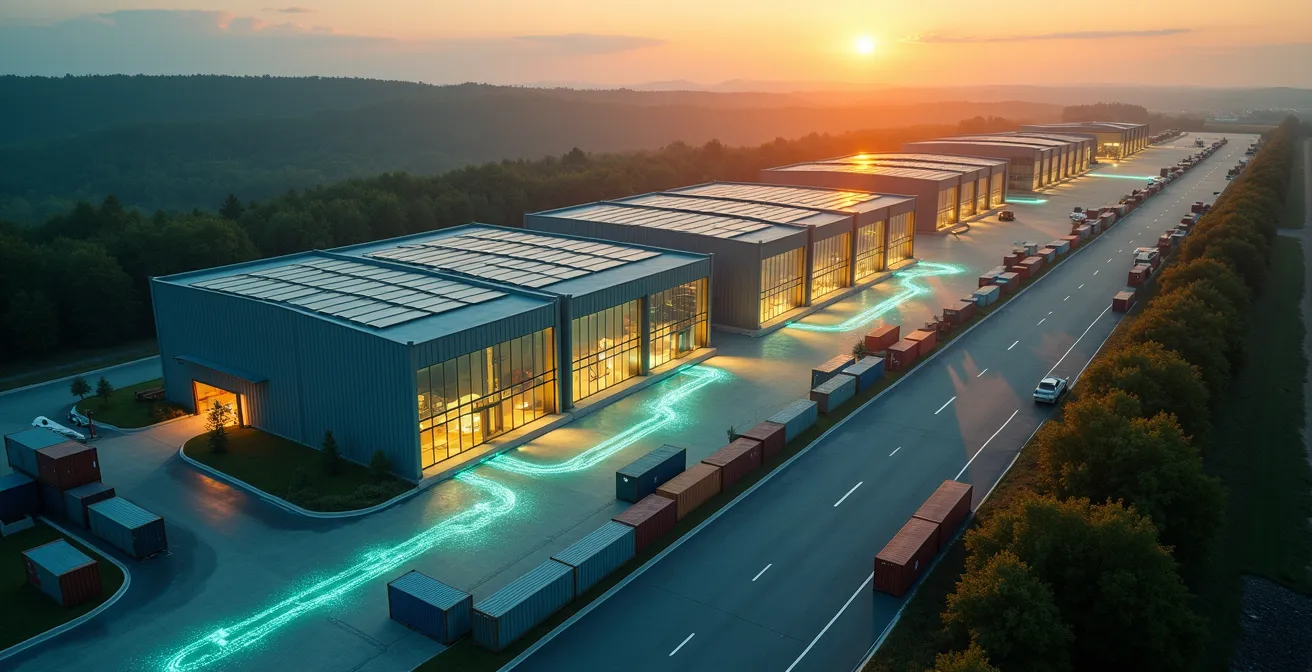
As the visual above suggests, the key is to create a seamless flow of cryptographically secured data. This requires a tiered data strategy. High-frequency readings from RFID temperature sensors are processed off-chain or on a high-speed Layer 2 solution, like a state channel. These secondary layers can handle thousands of transactions per second for fractions of a cent. Only critical events—such as a temperature excursion or a change of custody—or periodic “proof” summaries are anchored to the more secure, expensive main chain. This hybrid approach provides both real-time monitoring and immutable, auditable proof of compliance without overwhelming the network.
The Maersk-IBM TradeLens platform exemplifies this. By integrating IoT sensors that cryptographically sign data at the device level before transmission to their Hyperledger Fabric network, they can process over 10 million shipping events weekly. This architecture ensures end-to-end data integrity for high-value cold chains, providing a model for balancing cost, speed, and security.
This table outlines the trade-offs when architecting your sensor data strategy. A recent analysis of high-frequency data solutions provides a clear framework for this decision.
| Solution Type | Data Frequency | Cost per Transaction | Latency | Best Use Case |
|---|---|---|---|---|
| Layer 1 (Main Chain) | Every 15-60 minutes | $0.50-$5.00 | 1-15 minutes | Critical events only (threshold breaches) |
| Layer 2 (State Channels) | Every second | $0.0001-$0.001 | <1 second | Continuous monitoring with periodic anchoring |
| Hybrid Approach | Continuous off-chain, hourly on-chain | $0.01-$0.10 avg | Real-time locally, hourly globally | Cold chain with compliance requirements |
Ethereum or Hyperledger: Which Is Better for Enterprise Privacy?
Choosing the underlying blockchain platform is a defining architectural decision with long-term consequences, particularly regarding privacy. While public consciousness is dominated by public blockchains like Ethereum, enterprise supply chains operate under a different set of rules. You cannot expose sensitive pricing, inventory levels, or supplier relationships on a public ledger for competitors to see. For this reason, permissioned blockchains like Hyperledger Fabric have become the de facto standard for serious enterprise applications.
Unlike public blockchains where anyone can join, a permissioned network restricts participation to known, trusted partners. Hyperledger Fabric takes this a step further with its “channels” feature. This allows a subset of participants—for example, a buyer, their direct supplier, and a logistics provider—to conduct transactions in a private channel, invisible to other members of the same blockchain network. This granular control is essential for maintaining commercial confidentiality while still benefiting from a shared, immutable ledger among a consortium.
While Enterprise Ethereum solutions offer privacy features like Zero-Knowledge Proofs (ZK-SNARKs), these are often complex layers added on top of a fundamentally transparent architecture. Hyperledger Fabric was designed from the ground up for enterprise privacy and governance, making it a more direct and often more performant fit for supply chain use cases where confidentiality and control are paramount.
This comparative analysis, based on insights from a Deloitte report on supply chain innovation, clarifies the key differences for enterprise decision-making.
| Feature | Ethereum Enterprise | Hyperledger Fabric | Hybrid Solution |
|---|---|---|---|
| Privacy Model | ZK-SNARKs for selective disclosure | Private channels between parties | Public claims, private operations |
| Governance | On-chain smart contract based | Off-chain consortium agreements | Dual governance layers |
| Transaction Speed | 15-30 TPS (Layer 1) | 3,500+ TPS | Varies by use case |
| Interoperability | ERC standards, wide ecosystem | Limited to permissioned networks | Bridge protocols required |
| Compliance Readiness | Requires privacy layers | Built-in compliance features | Flexible compliance options |
The Interface Mistake That Makes Suppliers Refuse Your Blockchain System
The most technologically advanced blockchain system is worthless if your suppliers cannot or will not use it. The single biggest mistake in implementation is designing a one-size-fits-all, complex interface and expecting it to work for everyone from a smallholder farmer in a remote region to a multinational manufacturing partner with a sophisticated ERP. This lack of user-centric design creates immense adoption friction, dooming the project before it starts.

The solution is a tiered interface strategy that meets suppliers where they are. This means designing multiple, appropriate ways for different types of partners to interact with the blockchain. For a small farmer, this might be a simple SMS or WhatsApp bot that works offline and supports local languages. For a cooperative manager, a mobile app with OCR for scanning documents and voice input could be ideal. A mid-size supplier might need a web dashboard with batch-upload capabilities from Excel, while a large enterprise partner will require full API integration with their existing ERP system.
As the visual above demonstrates, the user context is everything. Each interface must be designed to minimize disruption to existing workflows while maximizing the incentive to participate. A universal feature across all tiers should be instant payment triggers via smart contracts upon verified delivery. When suppliers see a direct, immediate financial benefit to using the system—getting paid faster—adoption rates skyrocket. The goal is not to force everyone onto a single platform, but to create an ecosystem of entry points that makes participation seamless and rewarding for all.
Problem & Solution: Automating Payments Upon Delivery Without Disputes
The ultimate ROI of a well-architected blockchain system lies in its ability to move from simply tracking information to automating high-value business processes. The most significant of these is the procure-to-pay cycle. Traditionally, this process is plagued by disputes over delivery times, quantities, and quality, leading to long payment cycles and damaged supplier relationships. Smart contracts offer a powerful solution: self-executing code that automates payments based on verifiable, real-world events.
The problem is that a simplistic smart contract (“IF delivery is confirmed, THEN release payment”) is brittle and can lead to even bigger disputes. What constitutes “delivery”? What if the goods are damaged? The solution is a multi-oracle smart contract that codifies the specific terms of the agreement. This means the contract automatically verifies data from multiple sources—such as GPS data confirming location, IoT sensor logs confirming quality (e.g., temperature), and a digital signature from the receiving manager—before releasing funds.
The Home Depot’s implementation is a masterclass in this approach. By using multi-signature smart contracts that verify delivery against multiple oracles, they successfully reduced payment disputes by 70% and slashed payment cycles from over 30 days to immediate settlement. To build such a robust system, the contract logic must be sophisticated. It should include clauses for graduated payment release (e.g., 80% on delivery, 20% after quality check), an automated escrow mechanism if a dispute is flagged, and even dynamic pricing adjustments for minor infractions, preventing a total payment block for a small delay.
LIDAR or Cameras: Which Sensor Tech Suits Regional Logistics Best?
Beyond tracking individual items with RFID, a key part of proving sustainability is verifying the efficiency of the logistics process itself. This includes proving that shipments are utilizing maximum capacity to minimize carbon footprint per unit. This requires another layer of digital-physical linkage focused on measuring volume and identifying materials at scale. The two leading technologies for this are LIDAR (Light Detection and Ranging) and computer vision cameras, and the choice between them depends entirely on the nature of the cargo.
LIDAR excels at one thing: creating highly accurate 3D models of an environment. For regional logistics involving bulk materials like grain, ore, or timber, a LIDAR scanner mounted at a loading bay can instantly calculate the precise volume of material being loaded onto a truck. This data, when signed and committed to the blockchain, provides immutable proof of capacity utilization. However, LIDAR is poor at identifying what the material actually is.
Computer vision cameras, powered by AI, are the inverse. They are excellent at identifying discrete items, recognizing packaging materials (e.g., confirming the use of recycled cardboard), and reading labels. However, they are less accurate than LIDAR for precise volume calculation. For a load of mixed high-value electronics, a camera-based system is superior for auditing the contents. The ultimate solution, sensor fusion, combines both technologies for a complete audit, but at a higher cost. The decision must be aligned with what you need to prove: volume for bulk goods, or identity for discrete items.
This decision framework, supported by data on logistics technology, shows there is no single best sensor, only the right sensor for the job.
| Criteria | LIDAR | Computer Vision Cameras | Sensor Fusion |
|---|---|---|---|
| Volume Accuracy | ±0.5% error rate | ±5-10% error rate | ±0.3% error rate |
| Material Identification | Poor (shape only) | Excellent (visual recognition) | Superior (multi-modal) |
| Carbon Footprint Verification | Proves max capacity utilization | Identifies packaging materials | Complete sustainability audit |
| Cost per Unit | $5,000-$15,000 | $500-$2,000 | $7,000-$20,000 |
| Blockchain Data Size | ~1KB per scan | ~10KB per image | ~15KB combined |
| Best Use Case | Bulk materials (grain, minerals) | Discrete items (electronics) | High-value mixed cargo |
Why Eco-Friendly Packaging Increases Customer Loyalty by 30%?
While much of the ROI from blockchain is internal—efficiency, dispute reduction, and compliance—the most powerful long-term value comes from translating that internal truth into external trust. When customers can verify your sustainability claims for themselves, it transforms their relationship with your brand. Eco-friendly packaging becomes more than just a material choice; it becomes the physical gateway to the product’s verifiable story.
The mechanism is simple but profound: a QR code on the package that links to the product’s immutable record on the blockchain. This allows a customer to scan a coffee bag and see the exact farm it came from, the date it was harvested, the organic certifications signed by an auditor, and even the carbon footprint of its journey. This is not marketing; it is radical transparency. The Starbucks Bean-to-Cup program is a pioneering example. By embedding QR codes on their packaging, they provide customers with a direct window into their supply chain. This initiative was a key factor in a reported 27% increase in customer retention among sustainability-conscious consumers.
This strategy can be taken even further. Brands can create tokenized reward systems where customers earn blockchain tokens for recycling the packaging, creating a “packaging passport” that shows the entire lifecycle, or personalizing the impact story by showing a customer their cumulative environmental savings. The packaging stops being a cost center and becomes a loyalty-building media channel, directly answering the question of why this level of transparency drives retention. It replaces abstract claims with tangible, personal proof.
Key takeaways
- The integrity of a blockchain system is determined by the quality of its initial data, not the chain itself.
- A successful implementation requires a multi-layered architecture: secure physical sensors, a tiered data strategy (Layer 1/2), and a permissioned platform like Hyperledger.
- User adoption is paramount; a tiered interface strategy that meets suppliers where they are is more critical than the technology itself.
How to Design Zero-Waste Packaging for E-commerce Without Increasing Breakage?
The final frontier for a blockchain-enabled sustainable supply chain is moving beyond linear transparency (farm-to-fork) and into a fully circular economy. This means designing for zero waste, where packaging is not just recycled but actively reused. The primary challenges here have always been logistical complexity and asset loss. Blockchain, combined with IoT, provides the perfect architecture to solve this.
The Loop platform, which partners with major brands, demonstrates this future. Each reusable container—be it for ice cream or shampoo—is given a unique digital identity on the blockchain. This “digital product passport” tracks the container’s entire journey. Smart contracts automate the entire process: managing customer deposits, confirming returns at collection points, verifying sanitation procedures, and scheduling a container’s next use. IoT sensors embedded in the shipping totes monitor for shocks or temperature changes, ensuring breakage rates are kept minimal. This system provides a complete chain of custody for the packaging itself.
The results are transformative. Loop has achieved asset return rates of 89% and reduced packaging waste by over 85%, all while maintaining a breakage rate below 0.3%. This is a system that would be impossible to manage at scale with traditional databases, as it requires trust and coordination between multiple independent parties: the brand, the logistics provider, the sanitation facility, and the retailer. This model drastically reduces waste and the demand for virgin materials, representing the pinnacle of a truly sustainable supply chain. It addresses a significant portion of the $550 billion lost annually to manual processes and errors in the shipping industry by creating a self-managing system for valuable assets.
To architect the supply chain of the future, your next step is to initiate a pilot project focused on solving one specific, high-value problem—like automating supplier payments or verifying a single ethical raw material. Start small, prove the ROI, and build from there.