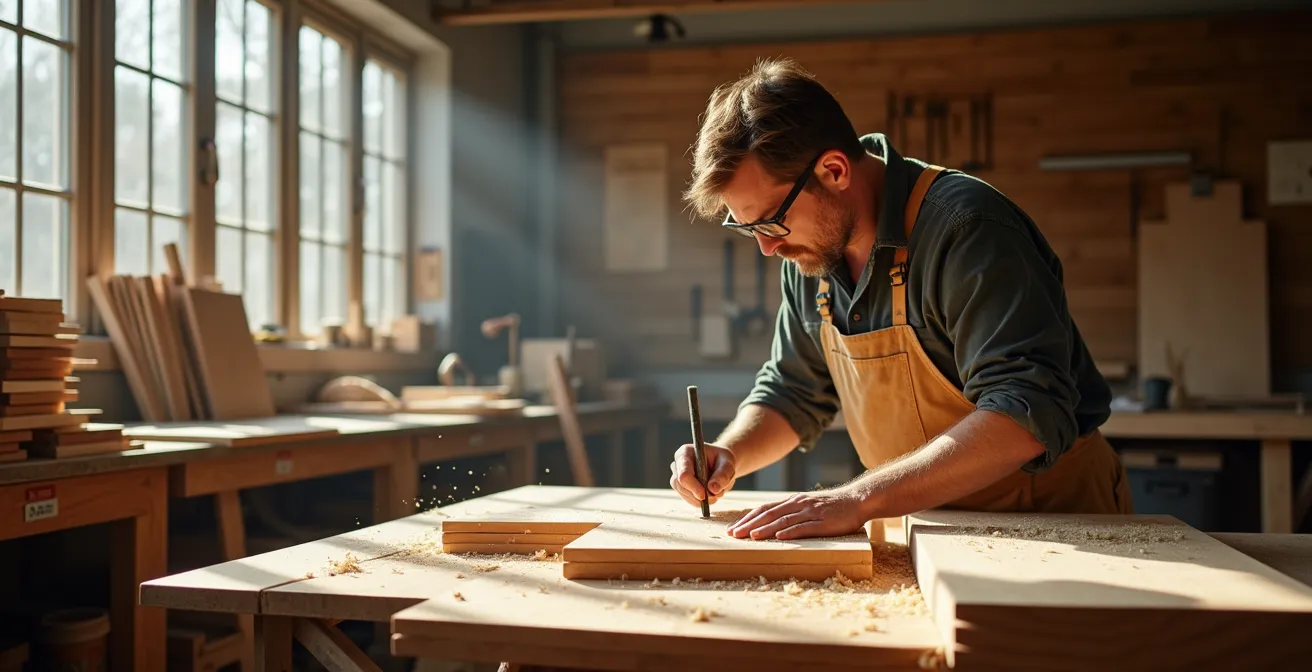
The highest return on investment in a luxury property comes from crafting a narrative of undeniable quality and permanence, a feat best achieved through strategic bespoke joinery.
- Bespoke joinery is a capital improvement that becomes part of the property’s appraised value, unlike freestanding furniture which is a depreciating personal asset.
- Custom built-ins proactively solve buyers’ “silent objections” regarding awkward spaces, storage, and character, elevating the home from a “product” to a “curated experience.”
Recommendation: To maximize value, shift focus from temporary staging to permanent, integrated solutions. Begin by commissioning a single, high-impact piece, like a dining table or media unit, from a local artisan.
In a competitive real estate market, homeowners preparing to sell a high-end property are often bombarded with the same advice: a fresh coat of paint, updated kitchen hardware, or professionally staged furniture. While these steps are important, they are merely surface-level improvements. They are temporary fixes that a discerning buyer can see right through. The goal isn’t just to make a home look presentable; it’s to fundamentally increase its perceived and appraised value in a way that feels permanent and deeply ingrained in the character of the house. This is where most sellers miss the most powerful tool at their disposal.
The common approach focuses on aesthetics that can be easily replicated or removed. But what if the key to unlocking a higher sale price wasn’t in what you add to a room, but in what you build into its very structure? The true strategy lies in shifting from decorative elements to architectural assets. This is the power of bespoke joinery—custom, built-in woodwork that transforms a space from a collection of rooms into a cohesive, intelligent, and valuable home. It’s about creating a narrative of quality so compelling it silences buyer objections and justifies a premium price point.
This article will guide you through the strategic application of custom joinery, not as a decorative flourish, but as a calculated investment. We will explore why mass-produced items can devalue a luxury space, how to collaborate effectively with artisans, and how specific choices in materials and design directly translate into a higher market valuation. By the end, you will understand how to wield bespoke joinery as a tool to manufacture narrative depth and secure an exceptional return.
To navigate this strategic approach to home valuation, we have structured this guide to address the most critical decisions you will face. The following sections break down how to leverage custom craftsmanship, from initial concept to the finest finishing details, to maximize your property’s appeal and final sale price.
Contents: Leveraging Bespoke Craftsmanship for Market Advantage
- Why Mass-Produced Art Lowers the Perceived Value of Luxury Homes?
- How to Brief a Local Artisan for a Custom Dining Table Without Misunderstandings?
- Built-Ins or Antiques: Which Adds More Character to a Modern Living Room?
- The Wood Stain Error That Ruins the Flow of Open-Plan Spaces
- Problem & Solution: Lighting Custom Cabinetry Without Glare or Shadows
- Velvet or Performance Weave: Which Survives Dining and Sleeping Daily?
- Why Moths Eat Dirty Cashmere First (Even Invisible Stains)?
- How to Hand-Wash Cashmere Sweaters to Prevent Pilling and Shrinking?
Why Mass-Produced Art Lowers the Perceived Value of Luxury Homes?
In the luxury market, value is a function of uniqueness. A potential buyer for a high-end property is not just purchasing square footage; they are buying into a lifestyle and a story. When they see generic, mass-produced furniture or decor—pieces they recognize from a mainstream catalogue—it shatters the illusion of exclusivity. It signals a lack of investment and originality, subtly lowering the home’s perceived status. Bespoke joinery does the opposite. It communicates a deep investment in quality and thoughtful design, creating an environment that feels curated and irreplaceable. This sense of permanence and uniqueness is a powerful psychological trigger for buyers.
The impact of custom work on a property’s appeal is not merely anecdotal. There are over 40 years of evidence showing how custom joinery transforms not just a home’s functionality but its core market valuation. A built-in library, a perfectly integrated media unit, or a custom window seat isn’t just furniture; it’s a permanent upgrade to the property’s architecture. It solves problems of storage and flow, turning awkward alcoves or empty walls into features of distinction. This proactive problem-solving demonstrates a higher level of care and quality that buyers are willing to pay a premium for.
Case Study: Sydney’s Milsons Point Luxury Development
To elevate a 130-unit luxury project, developers turned to bespoke solutions to create a distinct market advantage. A case study from OPPEIN’s work in Sydney’s North Shore showcases how custom wood veneer kitchens and bathroom cabinets with complex arch door panels were instrumental. This level of customization provided a high-end appearance and superior quality that could not be achieved with off-the-shelf components, setting the development apart and justifying its premium positioning.
Ultimately, mass-produced items suggest a transient, staged feel. Bespoke joinery communicates a deep, lasting commitment to the home itself. This distinction between a temporary “look” and a permanent “asset” is fundamental to maximizing property value.
How to Brief a Local Artisan for a Custom Dining Table Without Misunderstandings?
Commissioning a piece of bespoke joinery, such as a custom dining table, is one of the most effective ways to introduce a “hero” element into your home. This single piece can anchor an entire room and tell a powerful story of craftsmanship. However, the success of the project hinges on clear communication between you and the artisan. A misunderstanding at the briefing stage can lead to costly errors and a final product that misses the mark. The key is to translate your vision into a language of dimensions, materials, and functional requirements that leaves no room for ambiguity.
Your brief should be a comprehensive document, not a casual conversation. It must go beyond “I want a large wooden table.” Specify the exact dimensions required to fit the space while allowing for comfortable seating and movement. Provide visual references—photographs, sketches, or even architectural drawings—that illustrate the style you admire. Discuss the intended use: is it for formal dinners, daily family meals, or both? This will influence the choice of wood and the type of protective finish required. A clear, detailed brief empowers the artisan to become a true partner in realizing your vision, ensuring the final piece is both beautiful and perfectly suited to your home’s narrative.
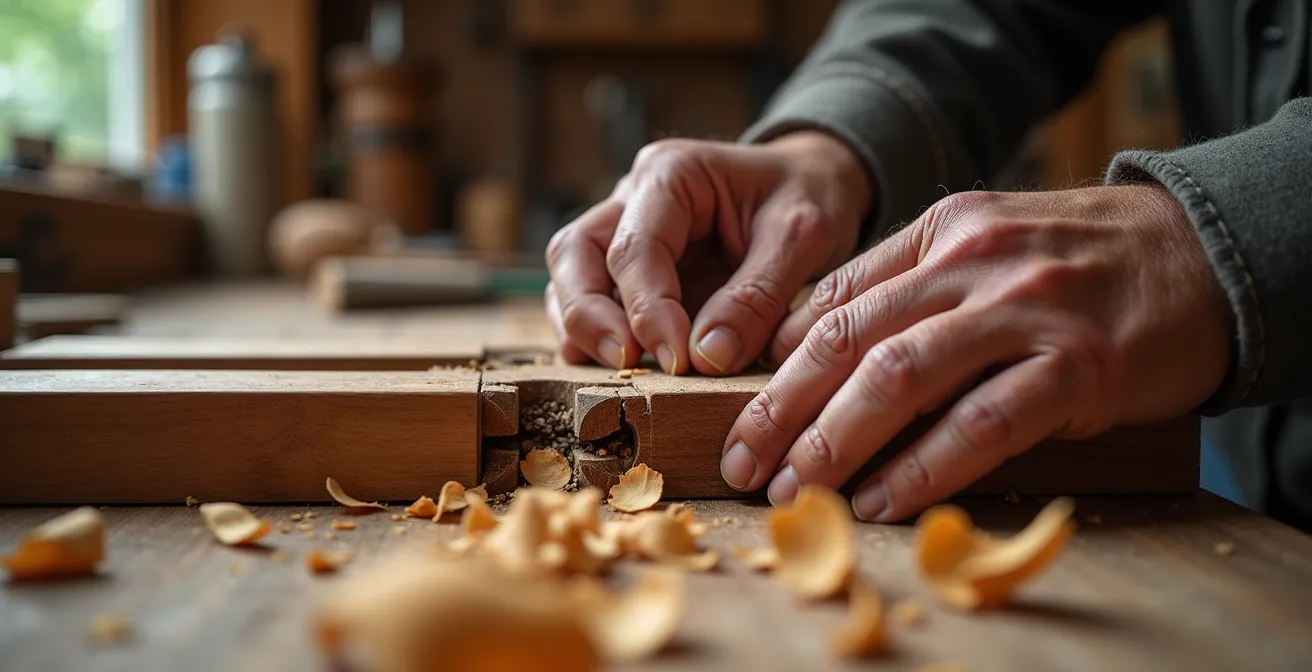
As this image highlights, the beauty of bespoke work lies in the details. Your brief must therefore be equally detailed. According to design experts, a professional briefing process involves a few critical steps. By following a structured approach, you can ensure that the artisan fully understands your needs, preferences, and the architectural context of your home, transforming a potentially stressful process into a rewarding collaboration. This is how you guarantee your investment results in a piece that adds tangible value.
Your Action Plan: Briefing an Artisan for Flawless Execution
- Meet and Contextualize: Initiate a consultation with designers or the artisan to discuss your needs, style preferences, and the specific architectural details of the space where the piece will live. Provide floor plans and photos.
- Visualize and Refine: Request detailed sketches and, if possible, 3D visualizations using CAD technology. This allows you to see a realistic representation and make adjustments before any wood is cut.
- Curate Materials: Engage in a guided selection of materials. A good artisan will present you with options like rare figured woods, specialist veneers, innovative finishes, and artisanal hardware, explaining the pros and cons of each.
- Specify the Finish: Clearly define the desired finish—matte, satin, or gloss? Should it be stained to match existing woodwork or left natural? This is crucial for achieving cohesion.
- Confirm the Details: Sign off on a final drawing that includes all dimensions, material choices, hardware specifications, and finish details. This document becomes the contract and the definitive guide for the project.
Built-Ins or Antiques: Which Adds More Character to a Modern Living Room?
When seeking to add character to a modern living room, homeowners often face a choice between sourcing a unique antique or commissioning custom built-in joinery. While an antique can certainly bring a sense of history and a singular focal point, its value is tied to the object itself—it remains a personal asset that will leave with you when you sell. Built-in joinery, conversely, becomes an integral part of the property. It is a capital improvement that is factored into the home’s appraisal, directly increasing its saleable value. This fundamental financial distinction is critical for a seller focused on ROI.
Beyond the financial argument, built-ins offer a level of design cohesion and space optimization that standalone pieces can rarely match. An antique must fit an existing space; a built-in is designed to perfect it. It can transform an awkward alcove into a functional library, create a seamless media center that hides unsightly cables, or provide elegant storage that enhances the room’s proportions. This ability to solve architectural problems while adding aesthetic value creates a powerful impression of an intelligent, well-designed home. The following comparison breaks down the key differences from a value-driven perspective.
This table clearly illustrates how built-in joinery offers a superior long-term investment for a homeowner preparing to sell, as confirmed by decades of market analysis.
| Aspect | Built-Ins | Antiques |
|---|---|---|
| Property Value | Capital improvement, becomes part of appraised value | Personal assets that leave with seller |
| Space Optimization | Maximizes awkward geometries and alcove spaces | Standalone pieces, less flexible |
| Durability | Generations with minimal maintenance | Variable depending on age and condition |
| Customization | Fully tailored to space and needs | Fixed design, must work with existing |
The durability of well-made joinery further solidifies its value. As the experts at Tucker Joinery emphasize, this longevity is a key part of the investment’s appeal to a future owner.
Durability translates into genuine value. It’s an investment that will serve their family for decades.
– Tucker Joinery, 40+ years of custom joinery experience
The Wood Stain Error That Ruins the Flow of Open-Plan Spaces
In modern luxury homes, the open-plan layout is king. However, its greatest strength—the seamless flow between spaces—is also its greatest vulnerability. Nothing disrupts this flow more jarringly than a clash of wood tones. A common mistake is selecting flooring, cabinetry, and furniture with mismatched undertones (e.g., a cool, grey-toned oak floor next to warm, red-toned cherry cabinets). This creates visual chaos, making the space feel disjointed, smaller, and less thoughtfully designed. Achieving a harmonious and expensive look is not about matching woods perfectly, but about coordinating their underlying temperature.
Woods, like paint colors, have warm (yellow, orange, red) or cool (grey, blue, green) undertones. The first step is to identify the dominant wood tone in the space, which is typically the flooring. Any new joinery or wood furniture should then be selected to complement this undertone. You can either choose woods with the same undertone for a cohesive, monochromatic look, or create a sophisticated contrast by pairing a warm wood with a neutral one. The one combination to always avoid is mixing dominant warm and cool tones, as they will fight for attention and cheapen the overall aesthetic.
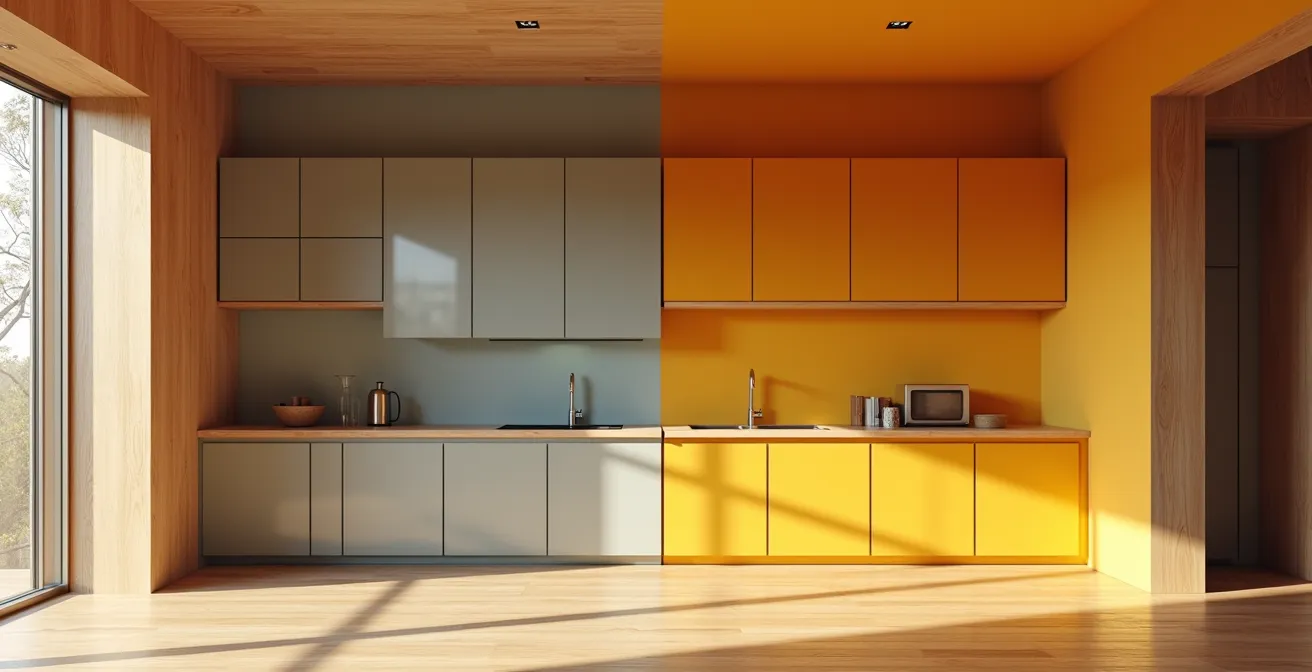
The visual difference is striking. A harmonious palette expands the space, while a clashing one contracts it. Grain is another critical factor. A key guideline from professional interior design principles states that if you are mixing two woods, even with similar undertones, only one should have a dominant, busy grain. If both feature strong patterns, they will compete visually and create a sense of clutter. This is a subtle but powerful rule that separates amateur design from a professional, high-value finish.
Problem & Solution: Lighting Custom Cabinetry Without Glare or Shadows
Custom cabinetry is a significant investment, but its value can be completely undermined by poor lighting. The wrong approach can create harsh glare, cast unflattering shadows, or wash out the beautiful color and texture of the wood. The goal of cabinetry lighting is twofold: functional illumination for the items inside, and ambient enhancement that adds depth and sophistication to the entire room. Achieving this requires a layered, strategic approach that goes far beyond simply installing a strip of LEDs.
The most common problem is direct, exposed lighting, which creates hotspots and glare. The solution is to use diffused light. This is achieved by installing LED strips inside recessed channels with frosted covers. Placing these channels at a 45-degree angle at the front of the cabinet interior casts light downwards and back, illuminating the contents evenly without shining directly into your eyes. Furthermore, the color temperature of the light is critical. A warm white light (around 2700K) will enhance the natural richness of most wood tones, while a cool, blue-toned light can make them look sterile and flat.
Case Study: Chelsea Residence Luxury Wardrobe
For a high-end Chelsea residence, the design firm Belleair Interiors demonstrated the power of masterful lighting in bespoke joinery. They crafted a walk-in wardrobe with dedicated, illuminated shoe displays and a central island with specialized storage. By layering different types of light—task lighting inside drawers, accent lighting for displays, and soft ambient light—they transformed the daily ritual of dressing into a luxurious, boutique-like experience, significantly elevating the perceived value of the master suite.
A truly high-end finish relies on layering. Use vertical “grazing” light to highlight the texture of a feature wall within the cabinetry, or add discreet internal shelf lighting to make objects appear to float. According to luxury interior designers, adding LED lighting for ambience provides a layered look to stylish spaces. Choosing matte, light-colored interior finishes for the cabinets will also help diffuse light softly, creating a sophisticated glow rather than a harsh glare. This attention to detail in lighting is what elevates good joinery to great, value-enhancing design.
Velvet or Performance Weave: Which Survives Dining and Sleeping Daily?
The choice of upholstery for bespoke built-in furniture—such as a dining banquette or a custom headboard—is as critical as the choice of wood. The fabric is the most immediate point of contact, and its durability directly impacts the long-term value and appeal of the piece. Two popular choices in luxury interiors are velvet and modern performance weaves. While both offer a high-end aesthetic, their suitability for daily use in high-traffic areas like dining nooks or bedrooms is vastly different. A strategic choice protects your investment and prevents a beautiful custom piece from looking worn prematurely.
Velvet, with its rich pile and deep lustre, offers unparalleled visual luxury. However, it is notoriously susceptible to pile crushing and lustre loss from constant pressure and friction. This type of wear is not measured by standard “rub tests” (Martindale tests), making it a poor choice for surfaces that endure daily seating. It is best reserved for high-visual, low-contact applications, such as a feature headboard that is leaned against but not sat upon. Performance weaves, on the other hand, are engineered for durability. They offer excellent stain resistance and are easier to clean, making them ideal for high-contact zones like a built-in dining seat. Their main vulnerability is a tendency towards pilling from abrasion over time.
The decision, therefore, is a strategic one based on application. Protecting your investment means matching the fabric’s properties to its intended use, as detailed in the following comparison.
| Factor | Velvet | Performance Weave |
|---|---|---|
| Daily Use Issue | Pile crushing and lustre loss (not measured by rub tests) | Prone to pilling from abrasion despite stain resistance |
| Best Application | High-visual, low-contact areas (feature headboards) | High-contact, high-risk zones (built-in seating) |
| Maintenance | Requires careful handling, professional cleaning | Easy cleaning but may show wear patterns |
| Value Protection | Better for statement pieces | Better for daily-use furniture |
For a property going on the market, choosing a durable performance weave for a custom banquette sends a message of practicality and long-lasting quality to potential buyers, reinforcing the idea that this is a well-considered, valuable home feature.
Why Moths Eat Dirty Cashmere First (Even Invisible Stains)?
A truly luxurious home considers not just the creation of beautiful spaces, but the preservation of the valuable assets within them. For a homeowner with a collection of fine garments, a bespoke wardrobe is more than just storage; it’s a vault. One of the greatest threats to high-end fabrics like cashmere and wool is the common clothes moth. However, moths are not drawn to the fabric itself, but to the proteins found in residual soils. This means they will target a sweater with even an invisible stain—from sweat, skin cells, or a tiny food spill—long before they touch a perfectly clean one. Therefore, the design of a luxury wardrobe must incorporate features that actively protect against these threats.
This is where bespoke joinery moves beyond aesthetics and becomes a tool for asset protection. Incorporating cedar-lined drawers and panels is a traditional and highly effective method, as cedar oil is a natural moth deterrent. Furthermore, proper wardrobe design should promote air circulation through ventilated cabinetry, which helps prevent the stale, humid conditions that moths and mildew thrive in. These are not features found in mass-produced wardrobe systems; they are hallmarks of high-end, thoughtful design that a discerning buyer will recognize and value.
The principle of durability extends from the joinery to the items it protects. Just as quality custom joinery can endure for generations, a well-designed wardrobe should ensure the longevity of the garments inside. Specialized storage zones for different fabric types, illuminated displays to easily monitor garment condition, and dedicated spaces for care supplies all contribute to a narrative of superior quality and preservation. This demonstrates a level of care that resonates deeply with luxury buyers.
Checklist: Designing a Wardrobe for Garment Preservation
- Install Cedar Elements: Specify cedar lining for all drawers and closet back panels to create a natural and aromatic moth-deterrent environment.
- Design for Ventilation: Incorporate subtle ventilation features, such as slatted shelves or discreet gaps in door panels, to ensure consistent air circulation.
- Zone for Fabric Types: Plan specialized storage areas—hanging space for silks, flat drawers for heavy knits, and ventilated racks for shoes—to provide optimal conditions for each material.
- Integrate Monitoring: Use soft, diffused LED lighting not just for ambiance, but to allow for easy visual inspection of garments to catch any potential issues early.
- Create a Care Station: Designate a specific drawer or shelf for essential garment care supplies, such as fabric shavers, brushes, and specialized detergents.
Key Takeaways
- Bespoke joinery is a capital improvement that is appraised with the house, unlike freestanding furniture which is a depreciating personal asset.
- Harmonizing wood stain undertones across an open-plan space is a non-negotiable detail that creates flow and a perception of greater size and value.
- Custom built-ins are a strategic tool to proactively solve a buyer’s “silent objections” about awkward layouts, insufficient storage, or a lack of character.
How to Hand-Wash Cashmere Sweaters to Prevent Pilling and Shrinking?
The ultimate expression of a home’s value lies in the details. Having invested in a bespoke wardrobe designed for preservation, the final step is mastering the care of the precious items within it. Hand-washing a cashmere sweater correctly is a skill that preserves your investment and reinforces the entire narrative of quality and care you’ve built throughout your home. Improper washing can instantly ruin a valuable garment through shrinking, stretching, or pilling, undoing the very preservation efforts your custom joinery was designed to support. Knowing the correct method is the final touch in a holistic approach to luxury asset management.
First, always use cold water and a specialized cashmere or wool shampoo. Regular detergents are too harsh and will strip the natural lanolin from the fibers, leaving them brittle. Submerge the sweater and gently squeeze the suds through the fabric. Never wring or twist cashmere, as this will stretch the delicate fibers and ruin the garment’s shape. After a few minutes of gentle washing, drain the basin and rinse with fresh, cold water until the water runs clear. The most critical step is drying. Lay the sweater flat on a clean, dry towel. Roll the towel and sweater together, pressing gently to absorb the excess water. Finally, unroll it and lay it flat on a fresh towel or a mesh drying rack, away from direct sunlight or heat, reshaping it to its original dimensions as it dries.
This careful ritual is more than just cleaning; it is a demonstration of respect for quality craftsmanship, from the artisan who built your wardrobe to the herder who sourced the cashmere. It’s the final, personal action that completes the story of a truly curated and well-maintained luxury home. This level of detail-oriented care sends a powerful, if unspoken, message to potential buyers about the overall quality and maintenance of the property.
To apply this level of strategic thinking to your property’s valuation and presentation, the next logical step is to consult with a design professional who understands not just aesthetics, but the art of leveraging bespoke solutions for a measurable return on investment.